
Technical Benchmark: Sourcing Bulk Furniture for Mumbai's Urban Infrastructure
The Mumbai Metropolitan Region (MMR) represents one of Asia's most demanding urban microclimates for commercial and residential furniture installations. Incorporating extreme relative humidity fluctuations (ranging from 55% during dry winter months to upwards of 95% throughout the monsoon season), heavy salt-laden sea air exposure along coastal corridors such as Marine Drive, Worli, Bandra, and Juhu, and high thermal stress on open-air rooftop venues, furniture specification in Mumbai requires specialized material engineering. Importing commercial furniture from intermediary trading firms often leads to early structural failure, wood warping, hardware corrosion, and upholstery degradation.
As a specialized Indonesian teak furniture manufacturer (CV. Prima Putra), we provide direct factory-to-project OEM and ODM bulk manufacturing solutions tailored specifically to the structural and aesthetic requirements of Mumbai's commercial hospitality, luxury real estate, and architectural project sectors. By eliminating intermediary trading floors and managing timber sourcing, kiln seasoning, CNC machining, hardware integration, and container consolidation under one factory roof, we guarantee technical compliance, predictable lead times, and substantial cost advantages for bulk buyers.
Information Gain Key Insight: Furniture bound for coastal Mumbai must account for the local equilibrium moisture content (EMC). Solid teak components kiln-dried to 8-12% moisture content combined with 316-grade marine stainless steel or 80-micron powder-coated aluminum frames provide double the operational lifespan compared to standard commercial indoor/outdoor furniture imported through unverified channels.
Material Science & Monsoon Engineering Specifications
To withstand Mumbai's unique environmental pressures, every piece of furniture produced in our Jepara manufacturing workshop follows rigorous material selection standards. The key technical considerations include:
1. Plantation-Grown Grade-A Solid Teak (Tectona Grandis)
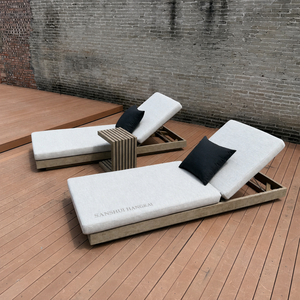
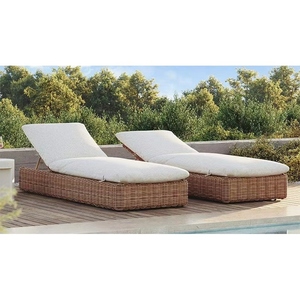
Teak wood sourced from Central Java's state-managed Perhutani plantations offers an exceptionally high natural rubber and silica content, making it uniquely impervious to water ingress and fungal rot. We strictly separate heartwood from sapwood. Only dense, oil-rich Grade-A heartwood is utilized for outdoor commercial sun loungers, poolside daybeds, and exposed dining tables. For indoor hospitality lines (such as hotel guestroom consoles, restaurant chairs, and bar stools), timber is kiln-dried over 21-day cycles down to an exact 8–12% moisture content to prevent swelling or shrinkage when operating inside air-conditioned environments.
2. Marine-Grade Aluminum & Polypropylene Fiberglass
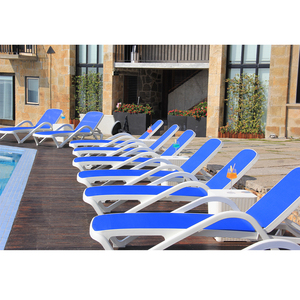
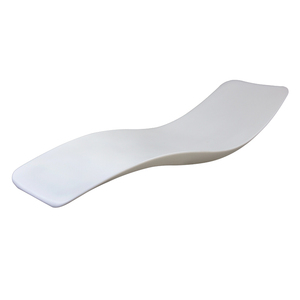
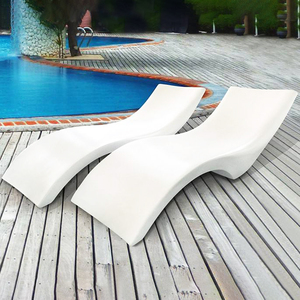
For high-density pool decks, beach clubs, and water-ledge installations (such as submerged sun loungers in resort pools), traditional metals deteriorate rapidly due to Mumbai's saline atmosphere. Our OEM manufacturing incorporates T6-grade aluminum extrusions coated with 80+ micron electrostatic polyester powder coatings, providing superior salt-spray corrosion resistance. Furthermore, our pure polypropylene and fiberglass injection-molded loungers resist UV degradation, retaining structural integrity even during peak summer temperatures exceeding 40°C in inland regions like Thane and Navi Mumbai.
3. High-Performance Outdoor Upholstery & Quick-Dry Foam
Standard open-cell cushion foam acts like a sponge during Mumbai's heavy downpours, leading to internal mold growth and odor retention. We supply high-density reticulated quick-dry foam paired with solution-dyed acrylic fabrics (such as Sunbrella or equivalent outdoor textile specifications). Water passes through the porous foam structure instantly, allowing sun loungers and outdoor sofa cushions to dry completely within 30–45 minutes following a cloudburst.
Material Performance Matrix: Commercial Outdoor Furniture in Mumbai
| Material Type | Monsoon Water Resistance | Coastal Saline Air Corrosion | Structural Lifespan in Mumbai | Recommended Application |
|---|---|---|---|---|
| Perhutani Grade-A Teak Wood | Exceptional (Natural Oils) | Zero Impact (Non-Metallic) | 15 to 25+ Years | Luxury Sea-Facing Penthouses, Hotel Pool Decks |
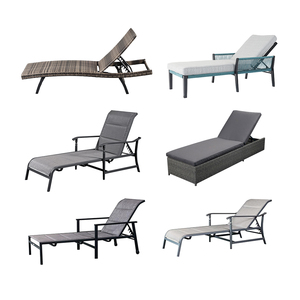
| Powder-Coated T6 Aluminum | 100% Waterproof | High (80+ Micron Finish) | 10 to 15 Years | Stackable Rooftop Bar Seating, Resort Loungers |
| In-Pool Fiberglass / PP | Submersible (100%) | Immune to Saline/Chlorine | 12 to 20 Years | Baja Shelves, Shallow Pool Ledges, Water Parks |
| Standard Mild Steel (Competitor) | Poor (Prone to Rust) | Rapid Oxidation (12 Months) | 1 to 3 Years | Not Recommended for Coastal Mumbai |
Localized Application Scenarios Across Mumbai & MMR
Different real estate typologies across the Mumbai Metropolitan Region demand distinct spatial, aesthetic, and functional furniture characteristics. Our OEM custom manufacturing pipeline directly serves four primary project verticals:
Scenario A
Luxury Sea-Facing Residences (Bandra, Worli, Juhu)
High-rise apartments and penthouses along Bandstand, Worli Sea Face, and Juhu Scheme require sleek, minimalist outdoor teak loungers and lounge sets that match contemporary floor-to-ceiling glass architecture while enduring harsh offshore sea winds.
Scenario B
Heritage & Commercial Hospitality (South Mumbai & BKC)
Luxury hotels in Colaba and Fort require classic hand-carved solid teak chairs and rich wood consoles, whereas modern business hotels in Bandra-Kurla Complex (BKC) prefer stackable aluminum-teak hybrid dining seating for rapid banquet reconfiguration.
Scenario C
Rooftop Bars & Urban Lounges (Lower Parel & Malad)
High-density commercial hubs require lightweight, highly durable, UV-resistant synthetic rattan and polypropylene pool loungers that offer quick storage options and low maintenance for heavy nightlife usage.
Scenario D
Luxury Pool Villas & Coastal Resorts (Alibaug & Karjat)
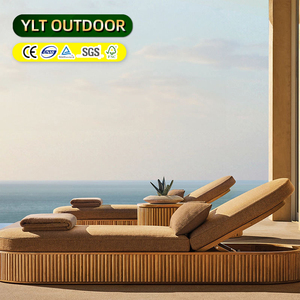
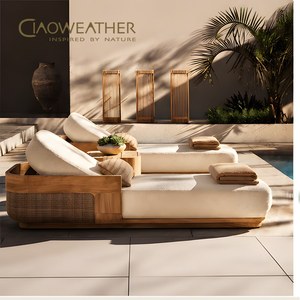
Weekend getaway villas across Alibaug and Karjat utilize large-format sectional teak outdoor sofas, double sunbeds, and in-pool fiberglass ledge loungers built for long-term leisure and exposure to variable microclimates.
Localized Development Trends Shaping Furniture Sourcing in Mumbai (2026–2030)
As Mumbai undergoes rapid urban infrastructure modernization—driven by projects like the Mumbai Trans Harbour Link (MTHL), the Coastal Road Project, and expanding metro corridors—the real estate and hospitality landscapes are evolving rapidly. Three macro trends are directly influencing furniture procurement criteria among top architects and bulk buyers in the region:
1. Integration of Biophilic & Natural Materials in High-Rise Real Estate
With high-density apartment living standard across Mumbai, developers are prioritizing biophilic interior design. The warm tone of organic, SVLK-certified Indonesian teak paired with natural or synthetic cane rattan allows developers to soften urban concrete environments, creating seamless transitions between indoor living rooms and exterior sea-view balconies.
2. Rise of Alibaug & Karjat as Premier Villa Destinations
Improved connectivity via roll-on/roll-off (Ro-Ro) ferries and the MTHL bridge has transformed Alibaug and surrounding coastal zones into primary luxury home markets. This shift has escalated demand for resort-grade, oversized outdoor furniture collections—including sun loungers, poolside daybeds, and 10-seater teak dining tables—capable of remaining outdoors year-round.
3. Eco-Compliance & IGBC Green Building Certifications
Major commercial developments in BKC, Lower Parel, and Navi Mumbai are aggressively pursuing Indian Green Building Council (IGBC) and LEED certifications. Procurement teams are now mandated to audit their supply chains. Our plantation-sourced teak wood, accompanied by official SVLK (Sistem Verifikasi Legalitas Kayu) documentation, provides complete timber traceability required for green building point allocation.
Logistics Blueprint: Factory Loading in Jepara to Delivery at JNPT Mumbai
Shipping bulk furniture internationally requires strict packing discipline to ensure zero freight damage and maximum cubic meter (CBM) volume utilization. As an experienced exporter loading up to seven 40-foot high-cube (40HQ) containers monthly, our ocean shipping route to Mumbai is fully optimized:
- Export Port of Origin: Port of Tanjung Emas (Semarang, Central Java, Indonesia).
- Destination Seaport: Jawaharlal Nehru Port Trust (JNPT / Nhava Sheva, Mumbai, India).
- Transit Duration: Direct ocean shipping routes average between 14 to 18 days sea transit time.
- Packing Standards: Five-layer heavy-duty corrugated cartons, edge corner protectors, micro-foam wrap, and moisture-absorbing desiccant packs inside sealed plastic wrapping to prevent sea-freight humidity buildup.
- Container Optimization: Custom Knock-Down (KD) furniture engineering allows high-density stacking, reducing freight cost per unit by up to 35% compared to fully assembled shipments.