Engineered for international resort hospitality, commercial project specifiers, and wholesale distributors requiring SVLK-verified solid timber and corrosion-resistant hardware.
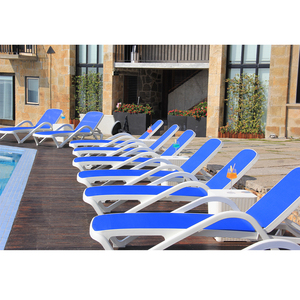
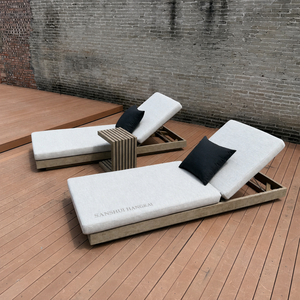
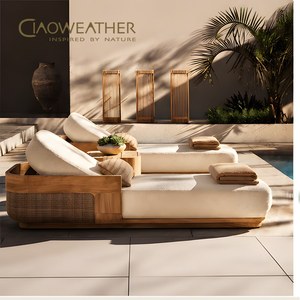
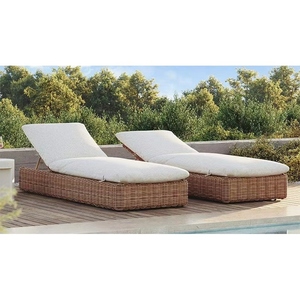
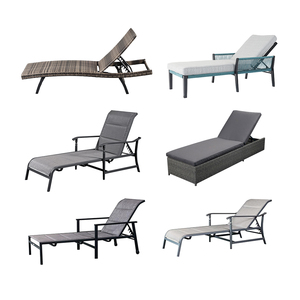
In the global commercial furniture market, selecting an authentic, OEM-capable solid wood manufacturer requires looking beyond aesthetic catalog shots. Global buyers, hotel purchasing directors, and trade importers must evaluate core technical capabilities, wood seasoning methodologies, and legal timber compliance.
The global demand for solid wood furniture—specifically driven by commercial hospitality projects, luxury residential developments, and high-end retail brands—demands unprecedented material integrity. Solid tropical hardwoods such as Indonesian Teak (Tectona Grandis) and Mahogany possess exceptional natural oils and silica content, offering unmatched resistance to rot, UV degradation, and structural stress. However, procuring solid wood at scale introduces serious operational risks if the manufacturer lacks advanced kiln-drying protocols, certified timber supply chains, and precise CNC machining.
To assist international buyers in conducting rigorous supplier due diligence, our engineering team evaluated leading solid wood production hubs across Southeast Asia and Europe. A qualified top-tier solid wood manufacturer must satisfy five essential operational benchmarks:
Unprocessed timber contains moisture content (MC) exceeding 40-60%. Premier factories utilize computer-controlled steam or vacuum kilns to reduce MC to 8% – 12% for indoor furniture and 12% – 15% for outdoor furniture. This precise thermal treatment prevents future checking, warping, and joint separation in dry import climates.
Strict legal due diligence is mandatory for importing into North America (Lacey Act), Europe (EUTR/EUDR), and Australia (Illegal Logging Prohibition Act). Tier-1 manufacturers maintain full chain-of-custody documentation via Government-verified Perhutani plantation teak and SVLK certification.
High-use hospitality furniture must eliminate structural reliance on external screws or weak adhesive dowels. Leading factories engineer traditional deep mortise-and-tenon joints reinforced with teak dowels and marine-grade polyurethane adhesives (EN 204 D4 standard).
A granular breakdown of timber grades used by top solid wood manufacturers to ensure accurate specification for outdoor versus indoor environments.
| Timber Grade / Material | Heartwood Ratio | Natural Oil & Silica Content | Target Climate Use | Expected Commercial Lifespan |
|---|---|---|---|---|
| Grade A Plantation Teak | 100% Dense Heartwood | Very High (Natural self-oiling) | Extreme Marine / Uncovered Outdoor | 25 – 50+ Years |
| Grade B Plantation Teak | 70% - 80% Heartwood | Moderate to High | Covered Outdoor / Semi-Shaded Patio | 15 – 25 Years |
| Sustainable Indonesian Mahogany | 100% Selected Grain | Moderate (Requires Sealed Finish) | Indoor Living, Dining & Executive Suites | 20 – 30 Years |
| Teak + Aluminum Hybrid | Grade A Teak Accents | High Structural Powder-Coating | High-Traffic Resort Poolside & Beach Clubs | 15 – 20 Years |
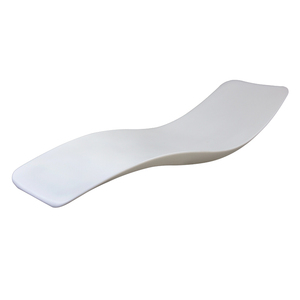
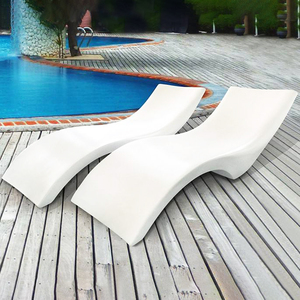
| Polypropylene / Fiberglass | N/A (Synthetic Polymer) | UV-Stabilized Composite resin | In-Water Pool Ledge & Commercial Aqua Lounging | 10 – 15 Years |
How macro-economic shifts, environmental mandates, and material science are redefining solid wood manufacturing parameters.

International procurement frameworks increasingly penalize unverified wood imports. By 2026, major hotel groups and retail chains will require digital chain-of-custody passports for every wood component, validating zero deforestation and ethical forestry practice from plantation to port.

Modern architectural projects favor mixed-material aesthetics. Top factories are integrating Grade A teak with T6-grade architectural aluminum, 316 stainless steel, marine-grade Sunbrella/Olefin fabrics, and synthetic UV-resistant wicker to improve strength while minimizing shipping weight.

Commercial buyers are bypassing regional middlemen and trading intermediaries. Utilizing 3D CAD modeling, CNC prototyping, and real-time factory floor inspections, brands can develop bespoke private-label collections with 30-40% reduced time-to-market and lower overall landed costs.

Global ocean freight efficiency dictates furniture design. Leading solid wood engineers now develop fully modular KD dining tables, sun lounges, and bench systems that maximize container cubage (CBM) without sacrificing joinery stability upon final site assembly.
Inside an export-grade Jepara manufacturing facility: how raw logs are transformed into precision-engineered contract furniture.
Understanding the internal workflow of a premier wood factory provides buyers with leverage during price negotiations and quality audits. At our primary manufacturing hub, CV. PRIMA PUTRA (Prima Furniture) in Jepara, Central Java, production adheres to a strict 6-stage engineering process designed to eliminate defects prior to container packing:
Sourcing Government-managed Perhutani logs. Quartersawn timber slicing is prioritized to yield straight grain alignment, ensuring maximum dimensional stability against lateral expansion and contraction.
Timber planks undergo computer-monitored kiln drying for 18 to 28 days depending on thickness. Digital pin-meters verify moisture levels across the core and surface before any cutting begins.
State-of-the-art multi-axis CNC routers machine mortise-and-tenon profiles with tolerances under 0.5mm. Hand carving and master joinery detailing are performed by veteran Jepara craftspeople.
Frames undergo full dry assembly to inspect alignment, squareness, and static weight tolerance. B2B contract items undergo simulated EN 581 stress tests for commercial seating safety.
Progressive machine and hand sanding up to 400-grit smoothness. Application of specialized teak oils, water-based outdoor topcoats, or polyurethane sealers in climate-controlled spray booths.
Items are wrapped in foam, edge protectors, and heavy-duty corrugated cartons with silica gel desiccant packs. Container loading is supervised to optimize weight distribution and CBM space.
Combining traditional Central Javanese woodworking heritage with modern global export standards.
As a leading custom wood furniture manufacturer established in 2011 in Jepara, Central Java, CV. Prima Putra (Prima Furniture) operates at the center of Indonesia’s timber working district. The factory specializes in manufacturing and exporting plantation-grown solid teak, mahogany, and mixed-material outdoor and indoor collections for interior designers, wholesale catalog buyers, hotel developers, and commercial project specifiers.
With an operational throughput capacity of loading up to seven 40-foot High Cube containers per month, Prima Furniture bridges the gap between artisan woodworking craftsmanship and high-volume commercial production reliability. By maintaining complete control over raw material procurement, kiln seasoning, structural assembly, and export documentation, the factory eliminates costly middle-layer trading fees while protecting product consistency across repeat batch orders.
Orders are built directly within our Jepara workshop—never subcontracted to unverified third parties. This guarantees complete pricing transparency and direct quality control.
We convert architectural sketches, 3D renders, CAD drawings, or physical samples into production-ready prototypes. Full prototype photography and dimensional sign-offs precede mass production.
Full SVLK legal timber documentation, V-Legal certificates, bills of lading, and custom commercial invoicing prepared for seamless customs clearance in North America, Europe, and Asia-Pacific.
Technical clarity for procurement managers, hotel project buyers, and wholesale furniture importers.
Our Jepara manufacturing facility currently loads up to seven 40-foot High Cube (40HQ) containers per month. Our standard production lead time ranges between 6 to 8 weeks following technical drawing sign-off, prototype confirmation, and deposit receipt. Lead times are locked into live production schedules to ensure guaranteed shipping container dispatch.
We work predominantly with legal Indonesian Plantation Teak (Tectona Grandis) and sustainably harvested Indonesian Mahogany. For mixed-material lines, we incorporate high-grade natural rattan, synthetic UV-resistant wicker, powder-coated aluminum, 316 stainless steel, quick-dry outdoor foam, and contract-grade outdoor upholstery fabrics (including Sunbrella, Agora, and Olefin).
Wood stability depends entirely on moisture control. All timber boards pass through automated kiln dryers to achieve a targeted moisture content of 8% to 12% for indoor collections (matching climate-controlled interior heating/AC) and 12% to 15% for outdoor collections. Moisture levels are electronically verified across core and surface areas prior to finishing and container stuffing.
Yes. Our engineering team routinely builds custom furniture from technical architectural drawings, 3D CAD files, photographic references, or physical samples. We produce a physical prototype, photograph it from all key structural angles, measure exact tolerances, and obtain written approval prior to launching batch manufacturing.
Absolutely. All wood processed in our factory is sourced under Indonesia's national timber legality verification system (SVLK - Sistem Verifikasi Kelestarian Kayu). Every export shipment includes full V-Legal documentation, ensuring seamless compliance with the US Lacey Act, European Timber Regulation (EUTR/EUDR), UK Timber Regulation (UKTR), and Australian illegal logging laws.
We offer customized packaging solutions ranging from standard high-density export cartons with corner guards and moisture-absorbing silica packs to ISTA-certified mail-order drop-test packaging for direct-to-consumer ecommerce brands. Branded box printing, barcode labeling, and private-label logo hardware tags are available.
Request our full export catalogue, request a factory quote, or schedule a technical CAD drawing review with our Jepara engineering team.