Outdoor living is no longer limited to summer barbecues. Patios now function as dining rooms, workspaces, and quiet morning retreats. Grand View Research’s Outdoor Furniture Market report identifies rising outdoor-room investment and residential renovation as important market drivers. The Freedonia Group also reports continued demand for durable, space-efficient outdoor furnishings. These trends make Teak Folding Patio Chairs worth closer attention.
Teak combines practical performance with a warm, natural appearance. Its dense grain and natural oils help resist moisture, insects, and everyday outdoor exposure. However, teak is not maintenance-free. That distinction matters. Unfinished teak gradually develops a silver-gray patina, while regular cleaning helps preserve its honey-brown color. The USDA Forest Products Laboratory recognizes teak as a naturally durable wood, although product quality still depends on age, origin, construction, and finishing.
Folding designs add another advantage. A homeowner can open two chairs beside a bistro table, then store them under a covered deck after dinner. This flexibility suits smaller balconies and changing household needs. Look for FSC-certified wood, strong hinges, rounded edges, and corrosion-resistant stainless-steel hardware. These details often determine comfort after repeated seasonal use. Houzz’s 2024 U.S. Outdoor Trends research also points to continued homeowner investment in functional, personalized outdoor spaces. Still, convenience can be overstated. A folding chair needs sensible weight, stable joints, and a seat that remains comfortable for longer meals. The best choice balances appearance, verified materials, repairability, and realistic care expectations.
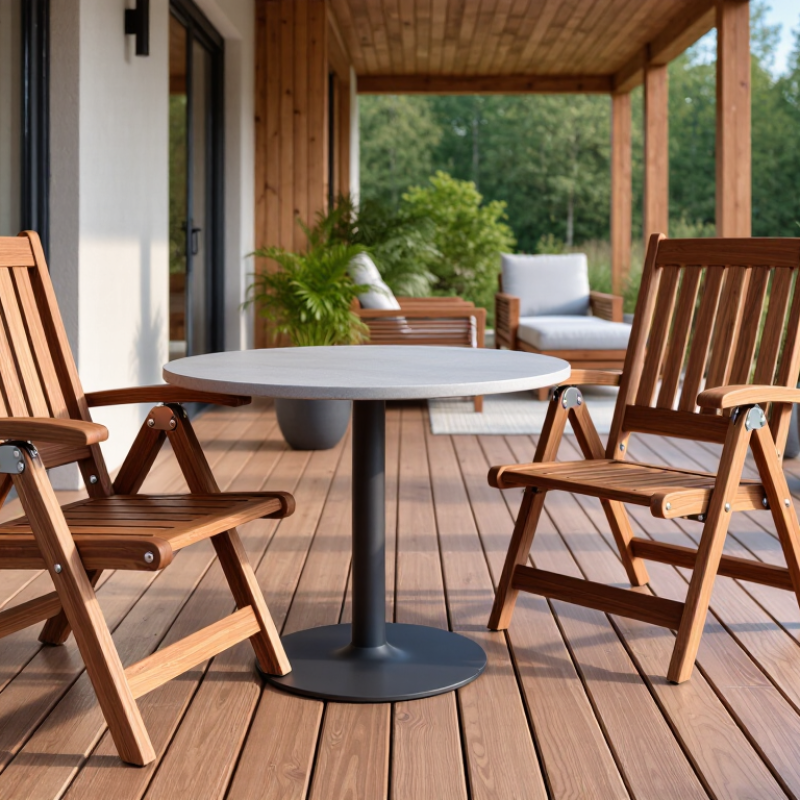
Teak folding patio chairs suit outdoor spaces because their wood balances strength, comfort, and manageable weight. A Janka hardness rating of about 1,070 lbf indicates strong resistance to dents and everyday surface wear. That matters when chairs meet gravel, shoe buckles, or busy patio use. The rating is not a promise of unlimited durability. Wood quality, moisture exposure, and construction still matter.
In practical use, teak feels solid when a chair opens and locks correctly. Its dense grain helps support repeated sitting, while natural oils slow moisture absorption. Rain may leave darkened patches, but careful drying usually reduces uneven coloring. I once assumed every teak chair would age identically. That was too simple. Sun direction, ventilation, and cleaning habits create visible differences within one table set.
Folding construction adds another performance test. Hinges should move smoothly without excessive side play, and joints should remain tight after repeated folding. A hard wood cannot compensate for thin hardware or poor alignment. Check the chair on a level surface before extended use. Teak’s 1,070-lbf hardness helps resist impact, but it does not prevent splitting around fasteners. Rounded edges, reinforced joints, and stainless outdoor-grade fittings improve reliability. Light seasonal cleaning with mild soap preserves a usable surface without removing the wood’s character. Some owners prefer a silver-gray patina; others want warmer golden tones and accept more maintenance.
Teak’s 1,070-lbf Janka hardness provides a useful reference for its resistance to denting compared with other commonly used woods.
Janka hardness measures the force required to embed a standard steel ball halfway into wood. Teak’s 1,070 lbf indicates moderate-to-high hardness, supporting durable patio-chair components that can better withstand everyday surface impacts. Outdoor performance also depends on weather exposure, construction quality, protective detailing, and maintenance.
Reference values: commonly published Janka hardness ratings for kiln-dried wood species; values may vary by sample, moisture content, and test method.
Why Choose Teak Folding Patio Chairs for Outdoor Spaces?
Natural teak contains oils that help slow moisture absorption. This matters when chairs face morning dew, light rain, and humid air. The wood does not become waterproof, however. Water can still enter through end grain, joints, and small surface cracks.
In outdoor use, teak usually feels less vulnerable than many untreated woods. Its dense grain helps reduce swelling and shrinking during changing weather. Folding chairs also dry more quickly when opened fully after rain. Leave space between slats. Avoid storing wet chairs in a sealed cover.
The surface may turn warm golden brown, then soft silver-gray. That change is natural. Some owners enjoy it; others prefer the original color and apply a suitable teak treatment. Oil can deepen the tone, but it may attract dust or create uneven patches. I have found that light cleaning and complete drying matter more than frequent treatment.
Small details still deserve attention. Check hinges and fasteners regularly, because teak’s moisture resistance does not protect every metal part. Wipe standing water from folded chairs. Keep them away from constant contact with damp soil or thick grass.
Not maintenance-free.
That phrase is misleading. Teak can forgive occasional neglect, but it cannot correct poor drainage or trapped moisture. A breathable cover, careful placement, and seasonal inspection usually support a longer outdoor life.
| Evaluation Dimension | Typical Teak Characteristic | Outdoor Benefit for Folding Patio Chairs | Recommended Care |
|---|---|---|---|
| Natural oil content | Teak heartwood contains natural oils and extractives that help slow moisture penetration and reduce the risk of surface drying. | Provides better resistance to humid air, occasional rain, and outdoor exposure than many less naturally durable woods. | Keep the surface clean and avoid applying film-forming finishes unless the product instructions specifically recommend them. |
| Moisture resistance | Teak is moisture-resistant, but it is not waterproof. Repeated wetting and drying can still cause movement, checking, or surface discoloration. | Suitable for patios, balconies, gardens, and poolside areas when water can drain freely. | Do not leave the chair standing in pooled water; allow it to dry thoroughly after heavy rain. |
| Dimensional stability | Teak generally undergoes normal expansion and contraction as its moisture content changes, although movement varies with grain, cut, and construction. | Well-made chairs can remain structurally stable through seasonal outdoor changes. | Inspect joints and hardware periodically, and tighten fasteners only as needed without overtightening. |
| Natural weathering | Unfinished teak commonly changes from golden brown to silver-gray when exposed to ultraviolet light and weather. | The color change is mainly cosmetic and can create a low-maintenance, weathered appearance. | Clean with mild soap and water. Use a suitable teak cleaner only when restoring a warmer color is desired. |
| Resistance to decay | Mature teak heartwood is classified as naturally durable in widely used wood-durability references; sapwood is generally less durable. | Helps the chair withstand outdoor biological exposure better than non-durable wood species. | Keep the chair ventilated and avoid prolonged contact with damp soil or continuously wet surfaces. |
| Strength and hardness | Teak is a moderately hard, strong hardwood. Reported Janka hardness values commonly fall around 1,000–1,155 lbf, depending on origin and test method. | Supports repeated sitting and folding when the frame and joinery are properly engineered. | Avoid dragging the chair across rough ground and check for cracks or loose joints before use. |
| Folding functionality | A folding frame reduces the chair’s storage footprint compared with a fixed-frame patio chair. | Makes seasonal storage, transport, and space reconfiguration easier. | Fold only on a stable surface, keep fingers clear of hinges, and store in a dry, ventilated location when not in use. |
| Hardware compatibility | Outdoor hardware must tolerate moisture and tannins naturally present in teak. Corrosion resistance depends on the hardware material and environment. | Appropriate hardware helps preserve folding performance and reduces staining around fasteners. | Use corrosion-resistant replacement hardware of the correct size and inspect hinges regularly. |
| Cleaning requirements | Routine cleaning usually requires only a soft brush or cloth, mild soap, and clean water. | Reduces maintenance time while helping remove dirt, pollen, food residue, and mildew-supporting deposits. | Avoid abrasive pads, high-pressure washing, and harsh chlorine-based cleaners that may damage the surface. |
| Expected service life | Service life varies substantially with wood grade, joinery, finish, climate, drainage, and maintenance; no single lifespan applies to every chair. | High-quality teak furniture can provide long-term outdoor use when protected from standing water and excessive neglect. | Follow a regular inspection and cleaning schedule, especially in coastal, tropical, or very wet climates. |
Note: Performance depends on teak grade, construction quality, local climate, exposure level, and maintenance practices. Natural oils improve moisture resistance but do not make teak completely waterproof.
Compact patios need furniture that changes with the moment. Teak folding chairs provide that flexibility without sacrificing outdoor comfort. The United Nations’ World Urbanization Prospects projects that 68% of the global population will live in urban areas by 2050. Smaller balconies and patios will therefore require smarter layouts. Folding chairs can clear walking paths after meals, then return quickly when guests arrive. Measure twice.
A practical design should fold flat enough for a storage wall, utility closet, or narrow corner. Leave a small gap between folded chairs to improve airflow and reduce surface rubbing. Teak is naturally dense and moisture-resistant, while stainless-steel hinges can support repeated movement. The American Institute of Architects’ 2023 Home Design Trends Survey reported a 51% net increase in demand for outdoor living areas. That demand makes adaptable seating increasingly useful, especially where every square meter matters.
I once viewed folding furniture as a compromise. That assumption was incomplete. A well-balanced teak chair can feel stable, but hinges may loosen over time. Check fasteners seasonally, and avoid dragging chairs across tile. A light teak-cleaning routine also helps preserve texture, although weather will still change its color. Perfectly compact storage is rarely achieved without effort. Still, folding design makes a modest patio feel less permanent and more usable.
Teak folding patio chairs combine practical storage with natural weather resistance. Yet the wood’s origin matters as much as its appearance. FSC Chain-of-Custody certification tracks forest materials through harvesting, processing, manufacturing, and distribution. It helps buyers connect a finished chair with responsibly managed sources. The FSC Facts & Figures report recorded more than 160 million hectares of certified forests worldwide in 2024. That scale shows growing demand for verifiable forestry, although certification is not a magic shield.
For outdoor furniture, ask for a valid FSC Chain-of-Custody certificate, not only an FSC logo. Check the certificate holder, product scope, and certificate status in the public FSC database. A reliable supplier should explain whether the teak is FSC-certified, controlled wood, or mixed-source material. These terms are different. The FAO Global Forest Resources Assessment 2020 reported 420 million hectares of forest loss between 1990 and 2020. Responsible sourcing cannot repair that damage overnight, but traceability makes careless claims harder to hide. I still think buyers should question vague sustainability language.
Tips: Look beneath the chair. Clear grain, tight joints, and stainless-steel hardware suggest careful construction. Confirm the wood statement before purchase. Store folding chairs under cover during prolonged rain, even when teak is naturally durable. Wipe dust from the slats, and avoid harsh cleaners that leave pale patches. Ask for documentation in writing. Small details matter.
Teak folding patio chairs can bring warmth, strength, and practical storage to outdoor spaces. Their performance, however, depends on more than attractive wood grain. ASTM F1561 and EN 581 offer useful safety references, but they should not be treated as identical standards.
EN 581 focuses on outdoor seating, including stability, strength, durability, and mechanical safety. These tests examine risks such as tipping, frame failure, sharp edges, and finger entrapment.
ASTM F1561 requires careful interpretation because its scope may relate mainly to plastic outdoor chairs. It may not directly cover a solid teak folding chair. A responsible supplier should confirm the correct edition, product category, and test method with an accredited laboratory.
That detail matters. A certificate with the wrong scope proves little.
In practical inspections, I would open and close the chair repeatedly before judging its quality. The hinges should move smoothly, while locking points should resist accidental folding. Sit near the front edge. Shift weight sideways. Watch for leg movement, loose joints, or sudden frame flexing.
Teak can handle outdoor exposure, but moisture may still cause movement, swelling, or uneven folding. That part is easy to overlook.
EN 581 testing can support confidence in everyday seating, yet laboratory results do not replace maintenance. Check fasteners, hinge pins, and protective foot pads regularly.
A chair may pass testing and still become unsafe after poor storage or neglected repairs. That is the uncomfortable detail. Safety is an ongoing condition, not a permanent label.
It indicates strong resistance to dents from gravel, shoe buckles, and regular outdoor seating. It does not guarantee unlimited durability.
No. Natural oils slow moisture absorption, but water can enter joints, end grain, and surface cracks. Teak is moisture-resistant, not waterproof.
Open them fully and leave space between the slats. Wipe standing water away. Avoid sealing wet chairs inside covers.
Not necessarily. Sunlight and weather may change golden brown into silver-gray. A suitable treatment can preserve warmer tones, but uneven patches may appear.
Frequent oiling is not always necessary. Light cleaning and complete drying often matter more. Oil may deepen color while attracting dust.
Place it on level ground and check the hinges, locking points, joints, and foot pads. Look for side play or sudden frame movement.
No. Hard wood resists impacts, but poor alignment or weak hardware can still cause splitting. Reinforced joints and outdoor-grade fittings improve reliability.
Repeatedly open and close the chair. Shift your weight sideways. Check for tipping, sharp edges, loose joints, and accidental folding.
No. Testing can support confidence, but neglected hinges, damp storage, and worn fasteners may create later risks. Safety needs ongoing inspection.
Keep them away from damp soil and thick grass. Use a breathable cover, not an airtight one. Inspect them each season.
I once assumed they did. That was too simple. Sun direction, ventilation, and cleaning habits can make chairs in one set look different.
Teak Folding Patio Chairs combine strength, durability, and practical design for outdoor living areas. With a Janka hardness rating of approximately 1,070 lbf, teak can withstand regular use, movement, and everyday outdoor wear. Its natural oils help slow moisture absorption, supporting better resistance to humidity, light rain, and changing weather conditions when the chairs are properly maintained. Over time, teak may develop a silver-gray patina, while periodic care can help preserve its original warm color.
The folding structure makes Teak Folding Patio Chairs especially useful for compact patios, balconies, and multipurpose spaces, allowing them to be stored efficiently when not in use. Buyers can also look for FSC chain-of-custody certification to support responsibly sourced wood and improved supply-chain transparency. For added confidence, chairs designed around benchmarks such as ASTM F1561 and EN 581 can offer guidance on stability, strength, durability, and general safety for outdoor seating.