Outdoor Teak Bar Sets combine the warmth of solid teak with the practical height of a bar, creating a focused space for drinks, meals, and conversation. Their appeal is tactile: smooth armrests, golden-brown grain, and a naturally oily surface that handles changing weather. Teak is not maintenance-free, however. It still needs thoughtful cleaning, sensible drainage, and responsible sourcing.
Market reports show why this category deserves attention. Grand View Research has reported steady global growth in outdoor furniture, supported by residential gardens, balconies, hospitality projects, and outdoor entertaining. The Freedonia Group similarly identifies replacement demand and premium materials as important market drivers. These reports describe broad outdoor furniture, not teak bar sets alone. That distinction matters. Specific teak figures are often estimates, not perfect measurements.
Outdoor living designer Richard Frinier has described the goal as “bringing the comforts of indoors outside.” That idea explains the best Outdoor Teak Bar Sets: they should feel inviting, stable, and visually connected to the surrounding space. A well-designed set leaves enough knee room, resists wobbling on paving, and places surfaces within easy reach. Small details matter.
The evidence is encouraging, but not flawless. Teak quality varies by grade, origin, moisture content, and construction. Look for documented plantation sourcing, credible chain-of-custody certification, stainless-steel hardware, and replaceable components. A beautiful set can still be a poor purchase if its sustainability claims remain vague. That is an uncomfortable point. It should remain part of the conversation.
What Are Outdoor Teak Bar Sets?
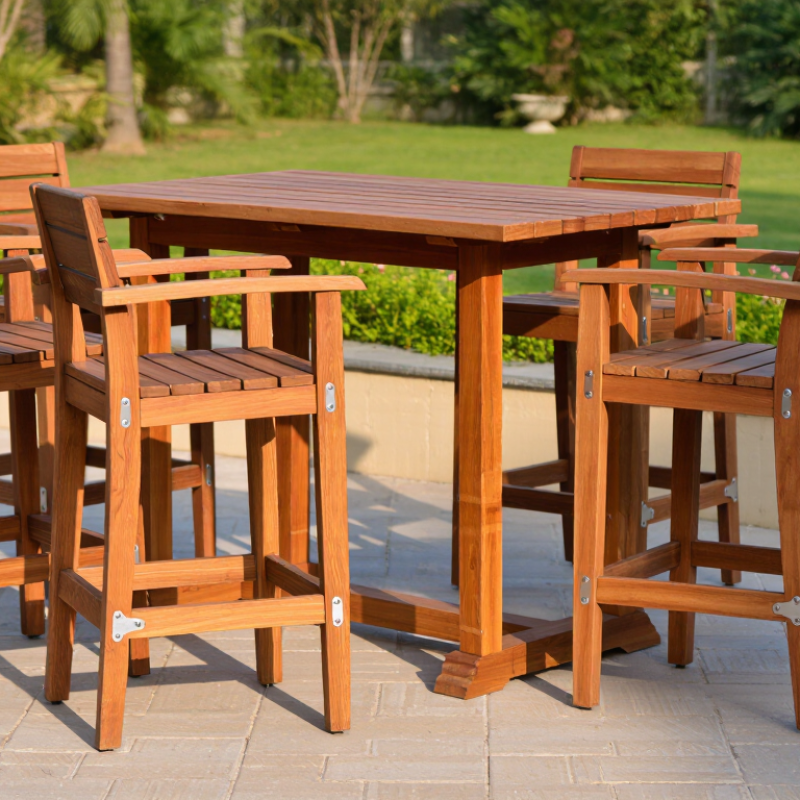
Outdoor teak bar sets combine a raised table with matching stools for patios, decks, balconies, and poolside areas. Their defining material is teak, a dense hardwood with natural oils. These oils help slow moisture absorption, surface checking, and insect damage. However, teak is not waterproof. Standing water can still stain joints, cushions, and unfinished surfaces.
Core features include a 40–42-inch bar-height table, supportive footrests, wide seating, and corrosion-resistant hardware. Slatted tabletops improve drainage after rain. Strong joinery matters more than decorative thickness. The USDA Forest Products Laboratory identifies teak as a moderately heavy hardwood, commonly valued for dimensional stability. Grand View Research’s outdoor furniture analysis also forecasts roughly 5% annual market growth through 2030. That trend reflects rising demand for durable outdoor living products, but durability claims still need careful inspection.
Tips: Check the wood’s origin and chain-of-custody documentation. Look for FSC certification when available. Confirm that screws are stainless steel, not ordinary plated metal. A silver-gray patina is normal without oiling. I prefer gentle cleaning and seasonal inspections over heavy refinishing. Some sellers promise “maintenance-free” performance, which feels too absolute. Even excellent teak needs airflow, level placement, and occasional checks around joints.
Outdoor teak bar sets combine weather resistance with a relaxed, architectural look. Common types include counter-height sets, full-height bar tables, folding sets, and modular corner units. Counter-height designs suit compact patios and casual meals. Full-height tables create a stronger entertaining area, especially beside an outdoor kitchen. Folding models store easily, but their joints may loosen over time. Modular sets offer flexibility, although they can look visually heavy in small spaces.
Teak contains natural oils that help resist moisture, insects, and seasonal exposure. However, it is not maintenance-free. The surface usually fades from honey-gold to silver-gray without oiling. The Freedonia Group’s Outdoor Furniture industry research identifies durability and low maintenance as major purchase factors in the U.S. market. Grand View Research also reports continued growth in outdoor furniture demand, driven by residential outdoor living. These trends support teak’s popularity, but material quality still matters. Look for thick legs, stable joinery, smooth edges, and responsibly sourced timber. A beautiful set can still feel uncomfortable.
Tips: Measure the serving path first. Leave about 36 inches behind each stool. Choose quick-drying cushions for humid climates. Check whether the footrest supports both feet. From practical testing, I would avoid narrow tabletops for frequent meals. They look elegant, yet plates and glasses crowd quickly. This is an easy design mistake. Also, do not place teak directly on constantly wet ground; airflow underneath helps the wood age more evenly.
Outdoor teak bar sets combine a tall table with matching stools for patios, decks, and poolside areas. Teak is dense, oil-rich hardwood that handles moisture better than many common outdoor woods. Its tight grain also reduces rapid swelling and shrinking during seasonal changes.
That matters.
High-quality construction depends on more than thick timber. Mortise-and-tenon joints, corrosion-resistant screws, and properly sealed connection points improve stability. Slatted tabletops allow rainwater to escape instead of collecting beneath glasses. Slightly angled seat surfaces can also dry faster after a storm. Check the underside carefully. Weak joints often appear there first.
Weather resistance is practical, not absolute. Sunlight gradually turns fresh honey-colored teak silver-gray, while trapped moisture may encourage mildew on shaded surfaces. Occasional cleaning with mild soap and a soft brush usually removes surface dirt. Avoid harsh pressure washing, which can roughen the grain. A breathable cover helps, but sealed plastic can trap condensation.
I once assumed teak needed constant oiling, but that advice is too simple. Oil can deepen its color, yet it may require frequent reapplication and create uneven patches. Small cracks can still appear in dry climates, so seasonal inspection remains sensible. Look for responsibly sourced timber and clear care instructions before buying.
What Are Outdoor Teak Bar Sets?
Choosing the Right Teak Bar Set for Your Patio
Outdoor teak bar sets combine a tall table with matching stools for patios, balconies, and poolside areas. Teak contains natural oils that help resist moisture, insects, and seasonal exposure. Still, it is not maintenance-free. I have seen neglected teak turn unevenly gray, especially where rainwater collects beneath the legs.
Measure before choosing.
Standard bar tables usually stand 40 to 42 inches high, while bar stools often measure 28 to 30 inches. Leave about 24 inches of table width per person. A four-seat set therefore needs roughly 96 inches of usable edge space. For smaller patios, a round or square table can improve movement. Check stool footrests, too. They make long conversations more comfortable.
Market data supports continued interest in outdoor living. Grand View Research valued the global outdoor furniture market at about 50.5 billion dollars in 2023 and projected growth through 2030. Mordor Intelligence reports a smaller market estimate, showing why research scopes matter. The difference is a useful warning: numbers are not always directly comparable.
For durability, inspect tightly joined boards, smooth edges, and rust-resistant hardware. Stainless steel fittings are preferable near humid or coastal locations. Choose unfinished teak if you want a soft silver patina. Use a breathable cover, mild soap, and occasional brushing. Avoid sealing the wood without checking the manufacturer’s guidance. I once preferred a darker finish, but it demanded more upkeep than expected. Tradition is not always convenience.
Outdoor teak bar sets typically combine a bar-height table with matching stools made from naturally durable teak. These commonly used planning dimensions help create comfortable seating while leaving enough room for movement around the set.
Outdoor teak bar sets combine elevated tables, stools, and weather-resistant joinery for patios or gardens. Their value depends less on perfect appearance than on consistent care. Teak heartwood contains natural oils, which slow moisture absorption and insect damage. However, it is not maintenance-free.
The EN 350:2016 durability framework places durable wood in a 15–25-year service category. Very durable wood can exceed 25 years above ground. Actual performance depends on heartwood quality, climate, drainage, and construction. The USDA Forest Service Wood Handbook, FPL-GTR-282, 2021, explains that repeated moisture changes create dimensional movement, surface checking, and joint stress. Keep the set level. Allow air beneath the legs. Wipe standing water after storms.
Clean teak every few months with mild soap, a soft brush, and clean water. Avoid aggressive pressure washing. It can roughen the grain and open joints. Let the wood dry fully before using a protective cover. Choose breathable covers, not sealed plastic. This detail is often missed.
A silver-gray surface is normal weathering, not structural failure. Sand lightly only when the grain feels rough. Teak oil can restore a warmer color, but it demands repeated applications and may attract dirt. I would not promise zero maintenance. Outdoor furniture faces ultraviolet light, humidity, pollen, and careless spills. Inspect fasteners twice yearly, especially near the bar top and footrests. Small cracks deserve attention before winter freezing expands them. A neglected corner can shorten an otherwise long service life.
Counter-height sets work well on compact patios and balconies. Full-height tables create a stronger entertaining area. Folding sets store easily, but joints may loosen. Modular corner units offer flexibility. They can look heavy in small spaces.
Teak contains natural oils that resist moisture, insects, and seasonal exposure. Its dense grain limits rapid swelling and shrinking. It still needs care. Constantly wet ground can damage airflow and encourage uneven aging.
Bar tables usually measure 40 to 42 inches high. Matching stools often measure 28 to 30 inches. Leave about 24 inches of table width per person. Footrests make long conversations more comfortable.
Leave about 36 inches behind each stool for comfortable movement. Measure the serving path before purchasing. A four-seat table may need roughly 96 inches of usable edge space. Measure first.
Clean surface dirt with mild soap and a soft brush. Inspect joints and small cracks during seasonal changes. A breathable cover reduces weather exposure. Avoid harsh pressure washing. It can roughen the grain.
Oil can preserve deeper color, but it requires repeated application. Uneven patches may appear. Unfinished teak gradually changes from honey-gold to silver-gray. I once preferred darker wood, but the upkeep became tiring. Not always convenient.
Look for thick legs, tight joinery, smooth edges, and corrosion-resistant screws. Mortise-and-tenon joints can improve stability. Check the underside carefully. Weak connections often appear there first. Stainless steel hardware helps in humid locations.
Choose enough tabletop width for plates and glasses. Narrow surfaces look elegant but crowd quickly during meals. Quick-drying cushions suit humid climates. Check whether the footrest supports both feet. Comfort is easy to overlook.
Outdoor Teak Bar Sets are outdoor furniture collections designed to create a comfortable, functional space for serving drinks, sharing meals, and entertaining guests. Typically including a raised bar table and matching stools, these sets come in various sizes, shapes, and styles to suit balconies, patios, poolside areas, and spacious gardens. Teak is valued for its natural strength, attractive grain, and resistance to moisture, sunlight, and temperature changes, making it a practical material for outdoor use.
When choosing a teak bar set, consider the available space, seating capacity, table height, design, and overall comfort. Solid construction, stable joints, smooth surfaces, and weather-resistant hardware can improve durability and safety. Although teak can withstand outdoor conditions, regular cleaning helps prevent stains, dirt buildup, and mildew. Owners may allow the wood to develop a natural silver-gray appearance or apply suitable maintenance products to preserve its original color. With proper care and seasonal protection, a teak bar set can remain attractive and useful for many years.