Jepara, Central Java — Furniture Manufacturer Since 2011
Prima Furniture - Indonesian teak furniture manufacturer logo CV. Prima Putra · Indonesia
0%

Choosing the right Teak Outdoor Dining Sets requires more than comparing photographs and listed prices. Global buyers must examine timber quality, construction, comfort, shipping conditions, and supplier reliability. A beautiful table can still disappoint if its joints loosen, its surface cracks, or its packaging fails during transit.

Experienced buyers often begin with the teak’s origin, moisture content, and grade. Responsibly sourced teak, supported by credible certification where available, offers stronger purchasing confidence. Look for kiln-dried wood, precise joinery, stainless-steel hardware, and smooth, water-resistant finishes. These details matter in humid coastal gardens and dry continental patios alike. Chair proportions also deserve attention. A dining set should support comfortable sitting for long meals, not merely look impressive in a catalog.

Think beyond appearance. Confirm table dimensions, carton sizes, assembly requirements, replacement parts, and after-sales support before ordering. Suppliers should provide clear product specifications and realistic lead times. Independent reviews, factory images, and sample inspections can reveal more than polished marketing language. Some buyers prefer natural silver-gray aging, while others want regular oiling and a warmer color.

There is no universal best set.

A minor weakness remains. Even premium teak can weather unevenly without care, especially under strong sunlight or standing water. This guide compares leading options through practical experience, material evidence, and buyer-focused evaluation. Its goal is not to promise perfection, but to help international customers choose durable, comfortable, and responsibly presented outdoor furniture.
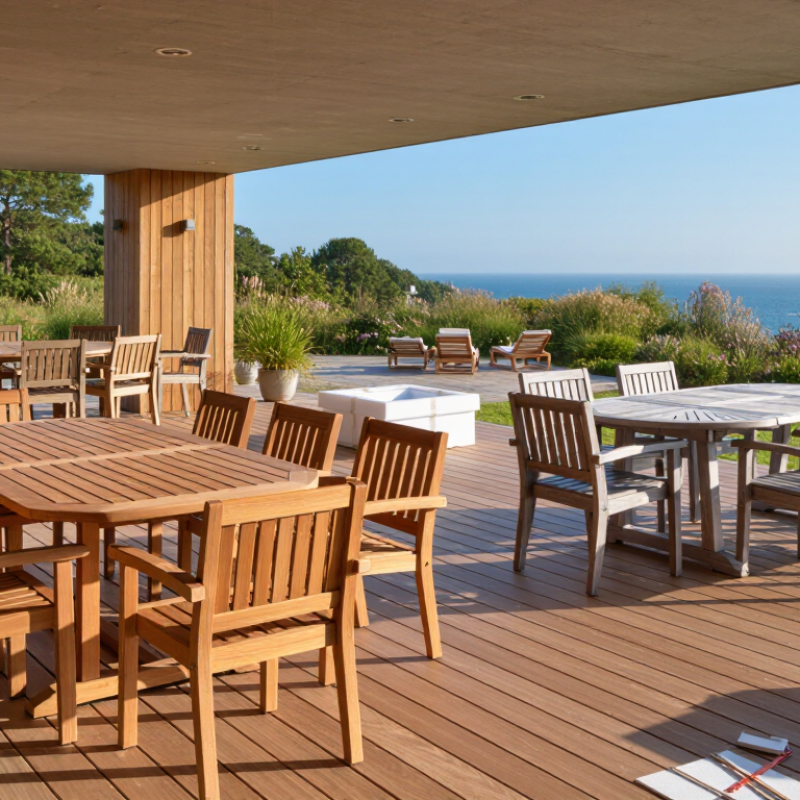
What Are the Top Teak Outdoor Dining Sets for Global Buyers?

What Defines a High-Quality Teak Outdoor Dining Set?

A high-quality teak outdoor dining set begins with the timber, not its glossy finish. Look for mature, dense teak with a tight grain and consistent golden-brown color. Small knots are acceptable. Large cracks are not. The wood should feel heavy, smooth, and stable when lifted or touched.

Ask whether it is responsibly sourced, kiln-dried, and tested for moisture content before assembly. Kiln drying reduces movement, but it does not make teak immune to weather. In humid climates, poorly designed boards can still cup or split.

A practical check is simple: inspect the underside, table edges, and hidden joints. These areas often reveal rushed sanding or uneven construction.

Joinery separates durable furniture from attractive furniture. Mortise-and-tenon joints, reinforced corners, and corrosion-resistant stainless-steel hardware support daily use. Hardware should sit flush, without sharp edges or visible staining.

For coastal projects, marine-grade hardware is a safer specification. A well-made tabletop needs controlled spacing between slats, allowing rainwater to drain and timber to breathe.

Chairs should remain balanced on a level surface, with firm arms and replaceable feet. I would also check the supplier’s load tests, warranty terms, care instructions, and replacement-part policy.

Some published specifications sound impressive but omit timber thickness. That omission matters. Thinner components may warp sooner, especially under strong sun.

Even experienced buyers can overvalue a flawless surface. Teak naturally changes color, and a slightly uneven tone may indicate less finishing rather than lower quality.

Which Teak Dining Set Styles Suit Different Outdoor Spaces?

Small balconies need compact teak dining sets, not oversized tables. A round pedestal table improves circulation around chairs. Folding or stackable seating also protects walking space. The 2024 Houzz Outdoor Trends Study reports continued investment in functional outdoor living areas. That supports flexible designs for apartments and narrow terraces. Measure the door swing first. Many buyers forget it.

For long patios, a rectangular teak table creates a clear dining axis. An extendable model can serve four people daily and eight during gatherings. This style suits global buyers who balance limited space with seasonal entertaining. The Freedonia Group’s outdoor furniture analysis identifies replacement demand and residential improvement as important market drivers. Teak performs well outdoors because its natural oils support moisture resistance. Yet it still needs sensible drainage and regular inspection.

Large gardens can accommodate modular teak sets with benches, armchairs, and separate side tables. Modular layouts adapt better when guests or shade patterns change. A round table feels social beside a pool, while benches save space along walls. The FAO’s Global Forest Resources Assessment 2020 records 294 million hectares of planted forests worldwide, but that figure does not prove every teak source is responsible. Buyers should request origin details and credible chain-of-custody evidence. Perfect sustainability claims deserve skepticism. Surface color may also weather unevenly, especially under strong sun. That is normal, but some users dislike it.

What Are the Top Teak Outdoor Dining Sets for Global Buyers? — Which Teak Dining Set Styles Suit Different Outdoor Spaces?

Teak Dining Set Style Typical Seating Common Table Size Recommended Outdoor Space Best Use Key Advantages Planning Considerations Maintenance Profile
Compact Round Bistro Set 2 people 60–75 cm diameter round table Small balcony, apartment terrace, compact patio or café-style corner Casual breakfast and coffee Space efficient Easy conversation Simple to reposition Allow approximately 75–90 cm of clearance around the table for comfortable chair movement. Low to moderate; wipe spills promptly and protect from prolonged standing water.
Square Four-Person Set 2–4 people 80–100 cm square table Small decks, balconies and square-shaped patios Everyday meals in limited spaces Balanced footprint Flexible placement Good for corners A minimum overall area of about 2.5 m × 2.5 m is practical when chairs and circulation space are included. Moderate; seasonal cleaning and periodic teak oiling only when an oiled appearance is desired.
Rectangular Six-Person Set 4–6 people 150–180 cm long × 85–100 cm wide Medium patios, family balconies, garden terraces and poolside dining zones Regular family dining Versatile capacity Comfortable serving area Easy to pair with armchairs Plan for approximately 90–110 cm of clearance along the long sides and at least 75–90 cm at the ends. Moderate; clean with mild soap and water, and allow the wood to dry fully after wet weather.
Extendable Rectangular Set 6–10 people 180–240 cm closed; up to approximately 280–320 cm extended Large terraces, spacious decks and multipurpose outdoor entertaining areas Flexible hosting and seasonal gatherings Adjustable capacity Efficient when closed Suitable for entertaining Measure the space with the table fully extended; allow at least 90 cm for chair pull-out and walking routes. Moderate to high; inspect extension hardware, keep leaves clean, and avoid trapping moisture in joints.
Oval or Elliptical Set 6–8 people 180–240 cm long × 100–120 cm wide Long patios, landscaped terraces and spaces where softer circulation lines are preferred Comfortable group dining with easier movement around corners Soft visual profile Fewer sharp corners Good circulation Its curved ends can improve walkways, but the overall length still requires a generous dining zone. Moderate; use breathable covers if covered storage is unavailable and avoid non-breathable plastic wrapping.
Folding Teak Dining Set 2–6 people Commonly 70–180 cm long, depending on the folding configuration Small patios, rental properties, seasonal homes and flexible event areas Portable or occasional outdoor dining Easy storage Portable Useful for seasonal spaces Check folded dimensions, carrying weight and hinge clearance before selecting a storage location. Moderate to high; keep folding joints clean, dry and lightly lubricated according to the hardware instructions.
Counter-Height Teak Dining Set 2–6 people Table height usually 86–94 cm; table lengths commonly 120–180 cm Pool decks, outdoor kitchens, covered terraces and entertainment-focused patios Drinks, casual meals and social gatherings Relaxed entertaining Pairs with outdoor kitchens Elevated viewing position Use matching counter-height seating; standard dining chairs are not suitable because the table is taller. Moderate; keep seat cushions dry and check footrests and joints periodically.
Dining Bench Set 6–10 people 180–240 cm rectangular table with one or two benches Large family patios, garden dining areas and communal outdoor settings Informal group meals and shared seating High seating efficiency Informal appearance Fewer chair footprints Provide sufficient space beside the bench for people to enter and exit; backless benches need extra clearance behind them. Moderate; lift rather than drag benches to reduce stress on joints and patio surfaces.

Dimensions are typical planning ranges for outdoor teak dining furniture and may vary by construction. Teak naturally weathers from warm golden-brown to silver-gray when left unfinished; this color change does not by itself indicate structural deterioration. For international outdoor use, confirm local requirements for packaging, moisture protection, hardware corrosion resistance and sustainable timber documentation.

How Do Global Buyers Compare Materials, Sizes, and Features?

Global buyers should compare teak dining sets by material evidence, not photographs. The USDA Forest Products Laboratory describes teak as naturally durable and dimensionally stable, useful in humid outdoor conditions. However, teak is not maintenance-free. Its surface can weather from honey-brown to silver-gray, especially under strong ultraviolet exposure. Check whether the timber is solid teak, recycled teak, or a teak veneer. These materials perform differently.

Size must match both dining habits and shipping limits. A four-seat table suits compact balconies, while six seats usually need about 180 centimeters of length. Eight-seat designs may require 240 centimeters and wider access routes. The 2023 Global Logistics Performance Index shows significant differences in customs and delivery efficiency between countries. Buyers should measure doors, elevators, and terraces before ordering. Grand View Research also reports continued growth in the global outdoor furniture market, increasing demand for adaptable, weather-resistant sets.

Tips: Look for stainless-steel fasteners, replaceable glides, and removable cushions. Ask for timber origin and chain-of-custody documents. FSC reports emphasize traceability as a key part of responsible forest-product purchasing. A slatted tabletop dries faster after rain, but small objects may fall through it. Ceramic or stone surfaces look premium, yet they add weight and breakage risk. I prefer practical details over decorative claims, though personal preferences can still distort a careful comparison.

What Are the Top Teak Outdoor Dining Sets for Global Buyers?

Global buyers commonly compare teak dining sets by seating capacity, table footprint, tabletop thickness, wood quality, weather resistance, and hardware durability. The chart shows representative standard dimensions used in outdoor furniture specifications.

Six-seat and eight-seat configurations are widely selected for versatile residential and hospitality use. Buyers should also verify legally sourced teak, kiln-dried construction, stainless-steel hardware, UV-resistant finishes, and whether cushions or protective covers are included.

What Should Buyers Know About Teak Sourcing and Sustainability?

When choosing teak outdoor dining sets, buyers should examine the wood’s journey, not only its golden color. The FAO Global Forest Resources Assessment 2020 reports that the world lost about 420 million hectares of forest between 1990 and 2020. This makes traceable sourcing essential. Plantation-grown teak can reduce pressure on natural forests, but “plantation” alone proves little.

Ask for the country of harvest, plantation location, species name, and chain-of-custody documents.

The ITTO Biennial Review and Assessment of the World Timber Situation highlights uneven timber governance across producing regions. Therefore, suppliers should provide harvest permits, transport records, and third-party certification where available.

FSC or PEFC certification can strengthen credibility, but certification is not a substitute for careful questioning. I have seen beautifully finished furniture with vague origin details. That is a warning, not a minor paperwork issue.

Buyers should also check whether the teak is kiln-dried, sustainably harvested, and suitable for repeated outdoor exposure.

Tips: Request a recent certificate, not a logo image. Match the certificate holder with the actual manufacturer.

Check moisture control, stainless-steel hardware, and repair instructions. A reliable supplier should explain maintenance honestly.

Teak can weather silver-gray, develop small surface checks, and need occasional cleaning. Sustainability claims may still contain gaps.

Leave room for doubt, and record every sourcing statement in the purchase file.

How Can Teak Dining Sets Be Maintained for Long-Term Outdoor Use?

For global buyers, teak dining sets suit humid patios, sunny terraces, and cool garden rooms. The wood contains natural oils, but it is not maintenance-free. In my outdoor furniture checks, dust collected fastest beneath chair arms and around table joints. A soft brush and mild soap removed it without scratching the surface. I rinse each piece with clean water, then let it dry fully. Never trap moisture under a tight plastic cover.

Seasonal cleaning works well for most homes. Use a soft cloth, lukewarm water, and a diluted, non-abrasive cleaner. Test an unseen area first. Strong chemicals can mark the grain or damage nearby metal fittings. Teak may retain its warm honey color when protected, but it naturally turns silver-gray outdoors. This change is cosmetic, not structural. Oil is optional, and overuse can attract dirt or create uneven patches. I learned that the hard way. One heavily oiled tabletop looked darker at the edges after rain.

Inspect screws, bolts, and feet every few months, especially near salt air. Tighten loose hardware carefully, and replace corroded parts with outdoor-rated fittings. Keep the table level, so water does not pool after storms. During freezing weather, store cushions indoors and raise furniture from wet ground. A breathable cover helps. Airflow still matters. Sand small stains with fine paper, following the grain. Deep cracks or unstable joints deserve professional inspection. Maintenance should match local humidity, sunlight, and winter conditions.

FAQS

What wood quality should buyers expect from a high-quality teak dining set?

Look for mature, dense teak with tight grain and a consistent golden-brown color. Small knots are acceptable. Large cracks are not. The wood should feel heavy, smooth, and stable. Ask whether it was kiln-dried and responsibly sourced.

How can buyers inspect construction quality?

Check the table underside, edges, and hidden joints. These areas often expose uneven sanding or rushed assembly. Look for secure mortise-and-tenon joints and reinforced corners. A flawless surface can distract from weak construction.

Which hardware works best outdoors?

Corrosion-resistant stainless-steel hardware supports regular outdoor use. Coastal locations need more durable marine-grade specifications. Fasteners should sit flush and show no sharp edges or stains. Replacement hardware is useful later.

How should a teak tabletop handle rain?

Slatted tabletops allow rainwater to drain and timber to breathe. Spacing should remain controlled. Wide gaps may trap small objects. A wet table should dry reasonably quickly after rainfall.

What table size suits different dining spaces?

A four-seat table suits many compact balconies. Six seats usually require about 180 centimeters of length. Eight-seat designs may need approximately 240 centimeters. Measure doors, elevators, and terraces before ordering.

Is teak completely maintenance-free outdoors?

No. Teak naturally changes from honey-brown to silver-gray under ultraviolet exposure. Kiln drying reduces movement but cannot prevent all weather damage. Humid conditions may still cause boards to cup or split.

What material differences should global buyers compare?

Confirm whether the set uses solid teak, recycled teak, or teak veneer. These materials can perform differently outdoors. Ask for timber-origin and chain-of-custody documents. Photographs alone provide weak evidence.

Which practical features deserve attention?

Choose replaceable chair feet, removable cushions, and strong stainless-steel fasteners. Check load-test information, warranty terms, and replacement-part policies. Thicker components may resist warping better under intense sun. I may still overvalue appearance sometimes.

Conclusion

Choosing the right Teak Outdoor Dining Sets requires careful attention to wood quality, construction, design, and long-term performance. High-quality teak should be dense, well-seasoned, naturally resistant to moisture, and crafted with stable joints and smooth finishes. Buyers can select from compact bistro arrangements, extendable dining tables, stackable chairs, or large modular sets to suit balconies, patios, gardens, and hospitality spaces. Comparing dimensions, seating capacity, table mechanisms, cushion materials, and weather-resistant hardware helps global buyers match each set to their climate, space, and usage needs.

Responsible sourcing is also essential. Buyers should look for teak supplied through transparent, legally managed forestry systems and favor suppliers that provide clear information about origin and production practices. For long-term outdoor use, regular cleaning, prompt removal of spills, proper drainage, and protective covers can help preserve the furniture. Teak may naturally develop a silver-gray surface over time, while occasional oiling is an optional choice for maintaining warmer tones.


Clara

Clara

Clara is a dedicated marketing professional with a strong understanding of the company’s products, customers, and industry landscape. Through clear communication and thoughtful market analysis, she helps translate complex product features into practical value for businesses and everyday users. Her......
Talk