Jepara, Central Java — Furniture Manufacturer Since 2011
Prima Furniture - Indonesian teak furniture manufacturer logo CV. Prima Putra · Indonesia
0%

Commercial Hospitality Wooden Furniture is judged in places where design meets daily pressure: a restaurant chair dragged across stone, a hotel desk holding a guest’s luggage, or a lobby table wiped down repeatedly. These pieces must feel inviting and withstand constant use. For buyers, the challenge is comparing manufacturers on more than attractive product photography. Construction, wood sourcing, finish quality, customization, lead times, and after-sales support all matter.

Market data offers context, but not a shortcut. Grand View Research’s 2024 furniture market report estimated the global furniture market at US$647.3 billion in 2023 and projected continued growth through 2030. That figure covers furniture broadly; it does not isolate hospitality-grade wooden products. The distinction matters. A large market does not prove that a supplier can meet a hotel’s durability requirements or deliver consistent finishes across hundreds of rooms. Buyers should verify claims with material specifications, project references, samples, and clear warranty terms.

Furniture-design pioneer Charles Eames observed, “The details are not the details. They make the design.” In hospitality, those details include the feel of a chair edge, the stability of a table joint, and how a finish wears near a busy service area. No single checklist can settle every project. Some trade-offs remain. This guide compares leading manufacturers through practical criteria, helping readers identify suppliers whose craftsmanship, production capacity, and service match the intended space.
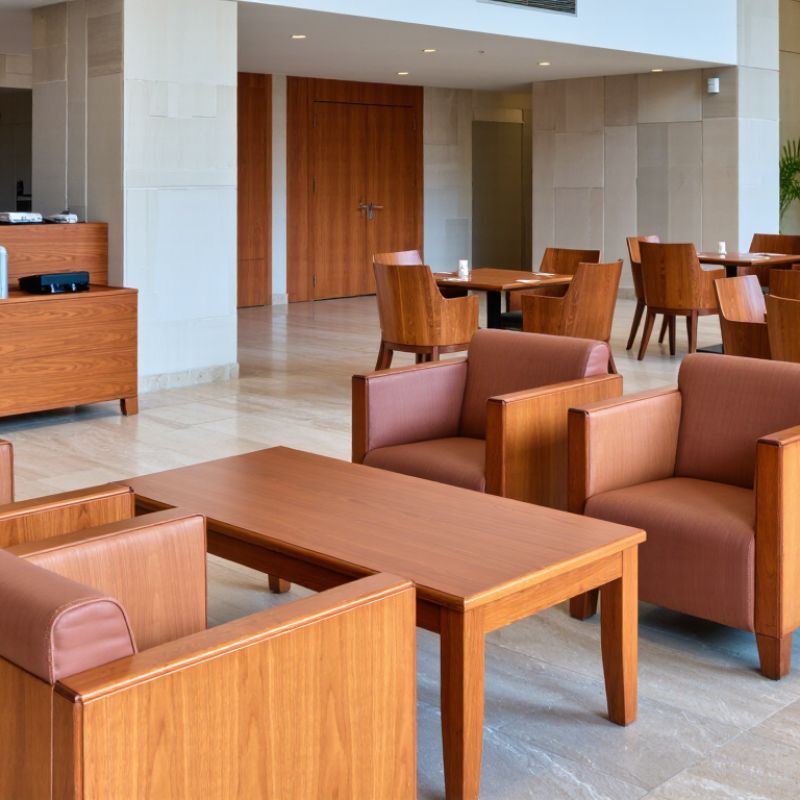
Top Commercial Hospitality Wooden Furniture Manufacturers?

Understanding Commercial Hospitality Wooden Furniture

Understanding Commercial Hospitality Wooden Furniture

Commercial hospitality wooden furniture must balance appearance with repeated daily use. A dining chair may be pulled across tile dozens of times each shift, while table edges meet trays, bags, and cleaning cloths. These conditions make joinery, surface treatment, and repair access as important as the wood’s color.

Solid wood, veneer, and engineered wood each suit different needs. Solid wood can often be refinished, but its movement with humidity requires thoughtful construction. Veneer can create a consistent look across many tables, though damaged edges may be harder to repair. Ask how joints are secured, whether replacement parts are available, and what care the finish requires. Small details matter.

A warm stain can soften a dining room, but appearance alone is a weak buying guide. Check chair stability on the actual floor, inspect underside connections, and test a finish with the cleaning products staff will use. Follow the supplier’s care guidance, since harsh cleaners can dull or damage some coatings. It is easy to assume heavier furniture is always more durable; that deserves a second look. Weight does not reveal joint quality or ease of maintenance. A physical sample helps, though one sample cannot show how a full room will wear over time.

No finish is maintenance-free.

Criteria for Evaluating Hospitality Furniture Manufacturers

A commercial hospitality furniture manufacturer should be judged by more than polished showroom pieces.

Ask what wood species and grade are used, and whether material varies between production batches. Solid wood, veneer, and engineered panels behave differently under frequent cleaning and changing indoor humidity. Request a finish sample, then inspect it under warm lighting and wipe it with the cleaning product your staff actually uses. Small marks show quickly. Check joinery, edge details, and the underside of a chair or table; these areas often reveal how carefully it was made. A sample can still mislead, so ask how production quality is checked before shipment.

Capacity and service matter just as much as appearance.

Confirm realistic lead times, packaging methods, replacement-part availability, and how the manufacturer handles damage or finish inconsistencies. Ask for test reports relevant to commercial use, plus references from projects with similar traffic and room layouts. Compare quotations by construction, finish, hardware, and warranty terms, not just unit price. If customization is offered, clarify how changes affect cost and delivery. I would leave room for uncertainty: even detailed specifications cannot predict every scratch or color variation. The useful question is how openly a manufacturer discusses those limits, and what practical support follows.

Materials, Craftsmanship, and Production Capabilities

Commercial hospitality furniture must handle more than attractive photographs. Dining chairs face repeated movement, while tabletops meet hot cups, spills, and daily cleaning. Solid hardwood can be repaired and refinished, but veneer over a stable engineered core may improve consistency across large orders. Neither is automatically better. Ask about core construction, veneer thickness, moisture control, and the finish’s resistance to common cleaning products.

Craftsmanship shows in details guests may never name: tight joints, smooth edges, aligned grain, and finishes without rough patches. On a sample chair, check wobble, screw access, and how the seat meets the frame. Small gaps can collect dirt. A polished sample, though, cannot prove every production piece will match; written inspection criteria matter.

Production capability is not simply factory size. Reliable makers can explain prototype approval, material sourcing, batch tolerances, quality checks, and packaging for transit. Ask how they manage replacement parts and repeat orders months later. A clear capacity plan helps projects stay coordinated, but timelines can still shift when materials vary. That part deserves honest discussion. A modest, documented production process may be more dependable than impressive promises.

Notable Commercial Hospitality Wooden Furniture Manufacturers

Notable commercial hospitality wooden furniture manufacturers are known for more than attractive showroom pieces. They design for busy dining rooms, hotel lounges, and reception areas where furniture is moved and cleaned daily. Experienced makers explain timber choices, joinery, finish care, and repair options in practical terms. Details matter.

Look for samples that show the underside of a table, the joints on a chair, and the finish under ordinary lighting. A well-built frame should feel steady, with no rocking on a level floor. Ask how seat parts or damaged panels can be replaced. Clear answers make comparison easier. A stain-resistant coating can also soften the wood’s natural grain, so the trade-off deserves an honest discussion.

Reliable manufacturers typically offer drawings, finish samples, and realistic production timelines before an order is finalized. They should also explain how dimensions can be adapted to a project without compromising stability or comfort. Sometimes a sample looks warmer under showroom lights. Check it near a window, too. Even careful specifications cannot prevent every scratch or color variation, and that limitation should be stated plainly.

Janka Hardness of Common Furniture Woods

A comparison of the approximate Janka hardness ratings of wood species commonly used in furniture. Higher ratings indicate greater resistance to denting.

Values are approximate pounds-force (lbf). Actual hardness can vary by species, growing conditions, and testing methods. Reference: USDA Forest Products Laboratory, Wood Handbook.

Selecting a Manufacturer for a Hospitality Project

Selecting a manufacturer for a hospitality project means looking beyond attractive product photographs. A lobby chair may look refined in a showroom, then feel unstable after months of daily use. Ask how frames are constructed, which joints are reinforced, and what finishes suit frequent cleaning. Details matter.

Review samples under the lighting conditions planned for the space. Warm lobby lights can make wood tones appear different from daylight, and small color variations may show across a large order. Request a full-size prototype or finish sample when possible. Check seat height, edge comfort, and how upholstery meets the frame. These are easy details to overlook.

A dependable manufacturer should provide clear specifications, realistic production timelines, and written quality checks. Confirm how packaging, delivery, and installation will be coordinated with the project team. Discuss replacement parts and care instructions before approving the order. Compare customization options against maintenance needs; intricate details can be beautiful but harder to repair. No review removes every surprise, and timelines sometimes shift. Ask direct questions, keep decisions documented, and allow room for a practical adjustment.

FAQS

What should I inspect in a furniture sample?

Check the joints, edges, underside, and finish under ordinary lighting. Details matter. A polished top can hide rough work below.

How can I assess a wood finish?

View the sample in warm light and near a window. Wipe it with the cleaning product staff actually use. Small marks show quickly.

Why ask about materials and production batches?

Solid wood, veneer, and engineered panels respond differently to cleaning and humidity. Ask whether materials vary between batches. The answer may still leave some uncertainty.

What questions help assess durability?

Ask how frames are built, which joints are reinforced, and whether a chair rocks on a level floor. Request relevant commercial-use test reports.

How should I compare manufacturer quotations?

Compare construction, finish, hardware, warranty, and customization costs, not only unit price. A lower quote may omit useful details.

What should a realistic production plan include?

Confirm lead times, packaging, delivery, installation coordination, and written quality checks. Timelines can shift. Keep decisions documented.

How can I plan for repairs?

Ask whether seat parts or damaged panels can be replaced. Get care instructions and replacement-part details before approving the order.

What should I know about customization?

Confirm how design changes affect stability, comfort, cost, and delivery. Intricate details can look appealing but may be harder to maintain. That trade-off is easy to underestimate.

Conclusion

Commercial Hospitality Wooden Furniture plays an important role in creating welcoming, durable spaces for hotels, restaurants, resorts, and other guest-focused venues. Choosing the right pieces involves balancing appearance, comfort, daily performance, and maintenance needs. A well-planned selection should suit the project’s design concept while accommodating frequent use and the practical demands of commercial environments.

When evaluating manufacturers, consider their material choices, woodworking expertise, production capacity, quality-control processes, customization options, and ability to meet project timelines. Solid and engineered woods may each be appropriate depending on the intended use, budget, and finish. Comparing manufacturers by these capabilities—not appearance alone—can help project teams identify a suitable partner. Clear communication about specifications, quantities, delivery, and after-sales support also helps ensure the final furniture meets the needs of both the venue and its guests.


Ethan

Ethan

Ethan is a professional marketing specialist with a strong understanding of the company’s products, market position, and customer needs. With a background in strategic communication, content development, and industry research, he is committed to presenting complex product information in a clear,......
Talk