Commercial hospitality spaces need outdoor seating that survives weather, heavy traffic, and repeated cleaning. Teak and Steel Outdoor Chairs offer a practical balance between natural warmth and structural strength. Teak brings a rich grain, comfortable touch, and useful resistance to moisture. Steel provides a firm frame for busy terraces, cafés, resorts, and restaurant patios. The combination also creates a stronger visual identity than basic plastic seating.
The National Restaurant Association’s 2024 State of the Restaurant Industry Report projected approximately $1 trillion in U.S. restaurant sales. That scale reflects intense competition for memorable dining environments. Customers often notice small details, including chair stability, surface comfort, and the sound of furniture moving across a terrace. Good commercial seating must support the guest experience without creating unnecessary maintenance work. It must also meet practical expectations for weight capacity, corrosion resistance, and daily handling. BIFMA performance standards provide useful reference points for commercial furniture testing, although buyers should verify the exact certification and test scope.
Material selection still requires judgment. Teak can weather into a silver-gray finish, but untreated surfaces may develop stains or uneven coloring. Steel can perform reliably outdoors, yet poor coatings may fail near salt air or standing water. No chair is maintenance-free. That reality is sometimes overlooked. Facility managers should inspect joints, welds, fasteners, and protective finishes before purchasing large quantities. They should also test sample chairs during real service, with wet floors, frequent movement, and changing sunlight. When properly specified and maintained, Teak and Steel Outdoor Chairs can support durability, comfort, and a more credible commercial setting.
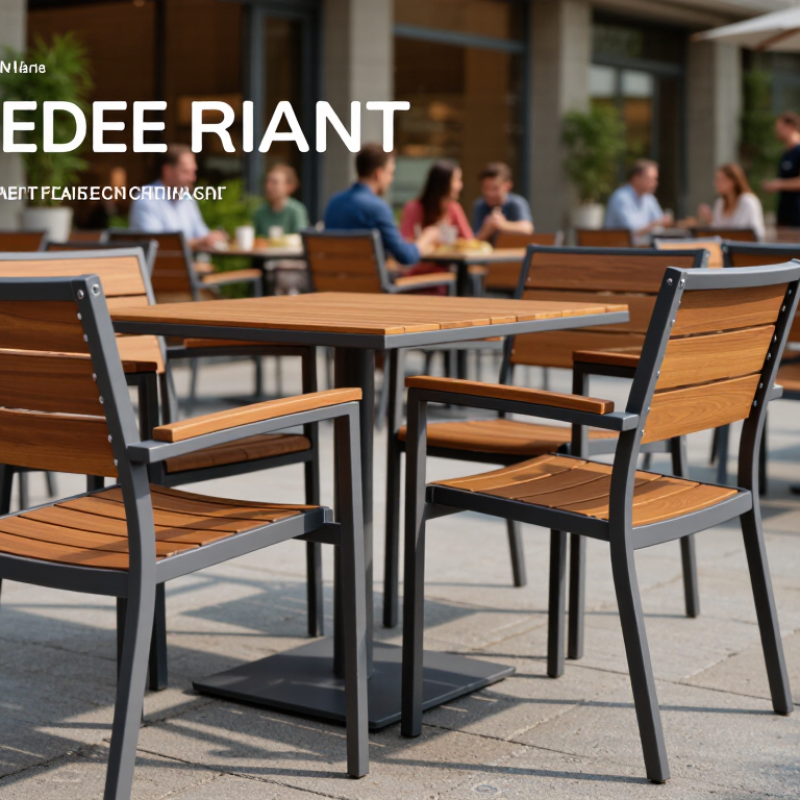
Teak and steel outdoor chairs offer a practical combination for restaurants, hotels, cafés, and shared terraces. Teak brings a warm touch, while steel supplies structural strength and a slimmer visual profile. Grand View Research reported that the global outdoor furniture market was valued at approximately USD 19 billion in 2023, with continued growth expected through 2030. That expansion reflects stronger demand for durable outdoor seating.
In commercial use, material selection must follow daily behavior. A teak seat can handle repeated contact, sunlight, and occasional moisture when properly maintained. The USDA Forest Products Laboratory’s Wood Handbook identifies teak as a naturally durable wood with good dimensional stability. Steel frames can support frequent movement, but exposed edges and poorly protected joints may develop corrosion. Watch the details. Powder coating helps, yet it is not damage-proof.
From practical site inspections, chairs perform better when staff can lift and stack them without strain. Rubber feet reduce noise on stone floors and limit frame abrasion. The 2024 Global Status Report for Buildings and Construction highlights the growing importance of resource efficiency in the built environment. That makes repairable parts and long service life more valuable than low purchase price alone. Still, teak changes color, and steel can show scratches after busy service. Designers should accept this aging process, or specify regular cleaning and refinishing. Maintenance assumptions are often too optimistic.
Teak and steel outdoor chairs suit commercial spaces because their durability comes from different strengths.
Teak is a dense hardwood with natural oils that resist moisture, insects, and daily weather exposure. Its grain also handles frequent contact without feeling fragile. Steel supplies structural strength, supporting heavier users and repeated movement around busy patios. Together, these materials create a stable chair with a warm, professional appearance.
Construction details matter as much as the materials.
Look for thick steel tubing, reinforced joints, and corrosion-resistant finishes. A protective coating can slow rust, but scratches still need prompt attention. Teak should have properly sealed or smoothly finished surfaces, especially around edges and fasteners. Drainage gaps are useful after rain. In commercial settings, chairs are often dragged across concrete, so replaceable feet can prevent frame damage and floor marks. No material is invincible. Poor welds or trapped water can shorten the chair’s service life.
Tips:
Inspect joints, screws, and feet every few weeks. Wipe away food residue before it hardens. Let wet cushions dry separately. Avoid harsh cleaners on teak, since they may strip its natural oils. It is easy to focus on appearance and miss the underside, where moisture often remains. A simple underside check can reveal problems early. Reduced maintenance is realistic, but maintenance-free furniture is not.
Commercial outdoor seating faces more punishment than residential furniture. Teak and steel chairs handle daily traffic, spilled drinks, sunlight, and sudden rain when properly specified. Teak contains natural oils that slow moisture absorption and help resist decay. Its surface will gradually change from warm honey to silver-gray. That color change is normal, not structural failure.
Steel provides dependable strength, but its protective finish deserves regular attention. Check joints, welds, and scratched areas every few weeks during busy seasons. A small exposed spot can become a rust problem, especially near pools or coastlines. Salt air changes that. Wipe chairs with fresh water, then dry them thoroughly. Avoid harsh abrasive cleaners, which may damage the finish and leave visible dull patches.
Maintenance should fit the actual site. Remove food residue promptly with mild soap and a soft brush. Let teak dry fully before stacking chairs, because trapped moisture can encourage staining. Teak oil is optional; applying it may preserve a darker tone but can increase upkeep and create uneven color. Keep it simple. I have seen maintenance plans fail because they were too complicated for busy staff. A short inspection checklist usually works better: tighten loose fittings, examine finish damage, clean drainage areas, and store cushions indoors during severe weather. No outdoor material is maintenance-free, and ignoring small defects is rarely economical.
Weather resistance and maintenance requirements based on common material-care practices for outdoor commercial furniture.
Teak naturally contains oils that help it resist moisture and decay, while steel provides high structural strength when protected with a suitable outdoor coating. Both materials benefit from regular cleaning and inspections; steel requires faster attention to coating damage to reduce the risk of rust.
Commercial outdoor seating must withstand weather, cleaning, and constant guest turnover. The National Restaurant Association’s 2024 State of the Restaurant Industry Report projected U.S. restaurant sales at $1.1 trillion. That scale makes durable furniture a practical investment. Teak offers natural oils and a close grain, helping it resist moisture and daily outdoor exposure. Steel adds structural strength and supports slimmer, more flexible frames. Together, they suit terraces, hotel courtyards, cafés, and rooftop dining areas.
Comfort still decides whether guests stay longer. A gently angled back, stable armrest, and breathable cushion can reduce pressure during extended meals. Seat height also matters. Small differences affect older guests and staff carrying trays. The Global Wellness Institute’s 2024 Global Wellness Economy Monitor valued the global wellness economy at $6.3 trillion in 2023. This growth supports calmer, more comfortable hospitality spaces, including outdoor seating zones. Teak and steel can fit many visual directions, from warm coastal settings to restrained urban designs.
The material choice is not flawless. Bare steel can become hot in direct sun, while teak needs cleaning and periodic surface decisions. Let it silver naturally, or restore its golden color. Either approach requires a maintenance plan. Specify rounded edges, replaceable cushions, corrosion-resistant finishes, and tested load capacity. In commercial use, attractive furniture is only successful when staff can move it safely and maintain it consistently. That detail is easy to overlook.
| Evaluation Dimension | Teak Outdoor Chairs | Steel Outdoor Chairs | Commercial Use Considerations |
|---|---|---|---|
| Material Characteristics | Dense tropical hardwood with natural oils that help the wood resist moisture, insects, and outdoor exposure. | Strong structural material that can be formed into tubular, wire, or sheet-metal frames and paired with protective coatings. | Both materials are suitable for outdoor hospitality settings when the chair construction, finish, drainage, and hardware are appropriate for the environment. |
| Comfort Potential | Wood surfaces generally feel warmer and less thermally conductive than metal in direct sunlight. Ergonomic comfort depends on seat shape, back angle, and optional cushions. | Perforated or slatted steel can provide ventilation and a firm seating surface. Cushions, woven panels, or contoured designs can improve long-duration comfort. | For restaurants, cafés, and hotels, seat depth, back support, edge treatment, and cushion cleanability are more important than material alone. |
| Weather Resistance | Naturally durable outdoors, although unsealed teak gradually changes from honey-brown to silver-gray when exposed to sunlight. | Outdoor-rated powder coating or a suitable corrosion-resistant finish helps protect steel from moisture and ultraviolet exposure. | Coastal, humid, or salt-air locations require careful specification of finishes, fasteners, drainage, and inspection routines. |
| Maintenance Requirements | Routine cleaning is usually sufficient for weathered teak. Oiling is optional and mainly used to maintain a darker color rather than to preserve basic outdoor performance. | Requires regular cleaning and periodic inspection for scratches, coating damage, exposed metal, and corrosion, especially at joints and fasteners. | Commercial operators should follow the furniture maker’s cleaning instructions and repair damaged finishes before corrosion or moisture penetration spreads. |
| Design Flexibility | Supports warm, natural, resort, coastal, and premium visual styles. Wood can be combined with metal frames, fabric, rope, or outdoor upholstery. | Supports minimalist, industrial, contemporary, and colorful designs. Steel can be shaped into many profiles and finished in a broad range of colors. | Using both materials in one furniture program can create coordinated zones while allowing different levels of visual warmth and maintenance planning. |
| Structural Performance | Well-constructed teak frames can provide a stable seating structure, but joints and moisture movement must be properly engineered. | Steel offers a high strength-to-section ratio and can provide rigid frames with relatively slim profiles. | Check the chair’s tested load capacity, weld quality, joint construction, stability, and suitability for frequent commercial use rather than judging by material alone. |
| Heat and Sun Considerations | Usually less likely than dark metal to become uncomfortable from rapid heat absorption, although any outdoor surface can become hot in direct sun. | Metal may heat quickly under strong sunlight, particularly when finished in dark colors or exposed without shade. | Shade structures, light-colored finishes, breathable seat designs, and cushions can improve comfort in sunny outdoor dining areas. |
| Cleaning and Hygiene | Can be cleaned with mild soap, water, and a soft brush. Open-grain surfaces should not be treated with harsh chemicals or aggressive pressure washing. | Smooth coated surfaces are generally easy to wipe down. Damaged or rusting areas should be addressed promptly to maintain hygiene and appearance. | For food-service environments, choose surfaces with accessible joints, limited dirt traps, removable cushions, and finishes compatible with routine cleaning. |
| Mobility and Storage | Solid wood construction may feel substantial and stable, while stackability depends on the frame design. | Steel frames can be designed for stacking, folding, or nesting, but weight varies considerably with tube size, sheet thickness, and construction. | Measure storage height, stacking quantity, handling frequency, and floor-protection needs before selecting a chair style. |
| Best-Fit Commercial Applications | Hotels, resorts, garden restaurants, cafés, patios, poolside areas, and venues seeking a natural or premium atmosphere. | Restaurants, cafés, terraces, event venues, food courts, public seating areas, and projects requiring strong color or form flexibility. | The best choice depends on traffic level, climate, design concept, storage requirements, cleaning procedures, and available maintenance resources. |
| Selection Checklist | Confirm teak grade, joint design, moisture management, surface finish, cushion fabric, and replacement-part availability. | Confirm coating system, corrosion protection, weld quality, fastener material, drainage, touch-up options, and replacement-part availability. | Request product care instructions, warranty terms, commercial-use suitability, testing information, and applicable safety documentation before purchase. |
Note: Actual performance depends on chair construction, finish quality, local climate, usage intensity, cleaning methods, and the manufacturer’s maintenance instructions.
Commercial outdoor chairs must survive more than rain. They face ultraviolet exposure, spilled drinks, dragged feet, and repeated cleaning. Teak is naturally dense and contains decay-resistant oils, according to the USDA Forest Products Laboratory’s Wood Handbook. Steel provides structural strength and easier shape control. Together, they suit terraces, hotel courtyards, and busy cafés.
Cost depends on service life, maintenance, and replacement frequency. Teak usually costs more initially, especially when legally documented and properly kiln-dried. However, its resistance to rot can reduce replacement pressure. Steel can be economical at scale, but coatings may chip around chair legs and welds. The World Steel Association reports that roughly 680 million tonnes of steel are recycled annually, supporting steel’s strong circularity profile. That figure does not make every chair sustainable. Transport, mixed materials, and damaged coatings still matter.
Sourcing deserves careful checking. The FAO’s Global Forest Resources Assessment 2020 recorded about 420 million hectares of forest lost between 1990 and 2020. Buyers should request verifiable chain-of-custody documentation for teak, not vague claims about “responsible wood.” Select smooth edges, replaceable feet, stainless or corrosion-resistant fasteners, and frames tested for commercial loading. A chair with beautiful timber may still fail at its joints. The calculation is not elegant. Review cleaning routines, local weather, warranty terms, and repair access before comparing prices. That is often where savings appear.
Teak handles sunlight, spilled drinks, daily traffic, and sudden rain. Its natural oils slow moisture absorption and decay. It still needs cleaning.
Sun and weather gradually change its surface color. Silver-gray usually signals normal aging, not structural failure. You may accept it or restore a darker tone.
Teak oil is optional. It can preserve a darker appearance but may increase upkeep and create uneven color. Simpler care is often more reliable.
Check joints, welds, and scratched areas every few weeks during busy seasons. Look closely at exposed spots. Small defects grow.
Wipe chairs with fresh water near pools or coastlines. Dry them thoroughly afterward. Salt air makes corrosion more likely.
Remove food residue quickly with mild soap and a soft brush. Avoid harsh abrasives, which can dull protective finishes. Gentle cleaning is enough.
Let teak dry fully before stacking. Trapped moisture can encourage staining between surfaces. This step is easy to forget.
Use gently angled backs, stable armrests, and breathable cushions. Seat height also matters for older guests and tray-carrying staff. Comfort is practical, not decorative.
Consider rounded edges, replaceable cushions, corrosion-resistant finishes, and tested load capacity. Bare steel can become hot in direct sunlight. No material is maintenance-free.
Teak and Steel Outdoor Chairs are a practical and attractive choice for commercial spaces such as restaurants, hotels, cafés, resorts, and outdoor event venues. Combining the natural strength and warmth of teak with the structural stability of steel, these chairs are designed to withstand frequent use while maintaining a refined appearance. Teak naturally resists moisture and outdoor conditions, while properly treated or coated steel can provide strong support and improved protection against rust.
Their weather resistance helps reduce maintenance, although regular cleaning, timely drying, and occasional care are recommended to preserve their condition. With options in different shapes, finishes, cushions, and colors, Teak and Steel Outdoor Chairs can complement a wide range of design styles and seating layouts. Businesses should consider comfort, available space, expected usage, maintenance capacity, and long-term value when selecting them. Although the initial cost may be higher than some alternatives, their durability, timeless design, and potential sustainability advantages can make them a worthwhile investment for commercial environments.