For global buyers, a sofa is more than a centerpiece. It must fit real rooms, daily routines, and changing expectations of comfort. Custom Upholstered Living Room Sofas offer choices in dimensions, fabrics, cushion feel, and finishes, but every choice affects the final result. A soft boucle may feel inviting in a showroom, yet prove difficult to maintain in a busy home. Details matter.
Furniture designer Charles Eames observed, “The details are not the details. They make the design.” For upholstered seating, those details include seam placement, frame construction, cushion density, and how a fabric looks in natural light. Buyers should request clear specifications and material samples before approving an order. A small swatch cannot tell the whole story, though. Ask how the fabric behaves across a larger surface and how the cushions are expected to settle with use.
This guide explores standout custom sofa options for international buyers, from tailored silhouettes to practical upholstery choices. It also considers lead times, communication, and the questions worth asking suppliers. These decisions are not always simple. A beautiful finish may not suit every household, and a lower price does not reveal the full value of a sofa. Compare the construction, warranty details, and delivery arrangements—not just the product photographs. There is room for uncertainty, especially when purchasing across borders. Careful checks can reduce it.
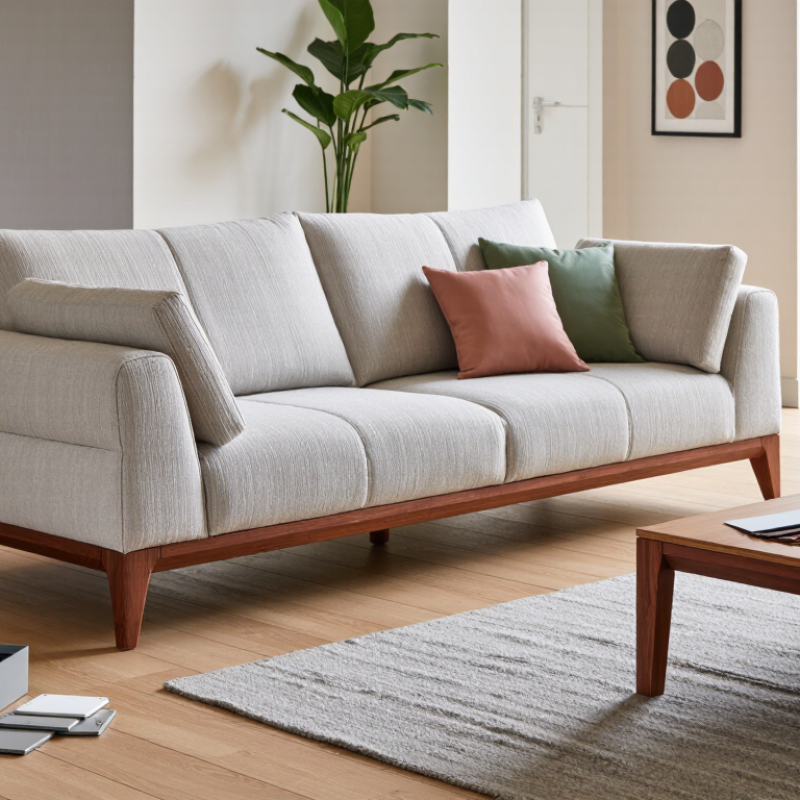
Custom Upholstered Sofas: Core Components and Global Buyer Requirements
A custom upholstered sofa is a set of choices, not just a shape and fabric. The frame carries the load; hardwood or engineered wood can work when joints and construction are clearly specified. Seat support may use springs or webbing, while foam density and cushion filling affect firmness and recovery. Ask for the seat depth, cushion build-up, and fabric composition in writing. Small details matter. For upholstery, request abrasion, pilling, and colorfastness test results, including the test method. A rub count alone can mislead. There is no universally perfect seat: a deep, soft cushion may feel inviting in a showroom but less supportive during long use.
Global buyers need specifications that travel well across teams and markets. Record dimensions in millimetres and inches, confirm swatch colors under daylight, and request care instructions, packing dimensions, and shipment weight before approval. Grand View Research estimated the U.S. home furniture market at USD 114.1 billion in 2023, with projected growth from 2024 to 2030. This is broader than the sofa category, so it signals market context, not sofa demand. Buyers should also request material and performance documents suited to their destination market. A sample can still differ from a production run; approve a signed reference swatch and check the first finished unit.
Frame and Seating: BIFMA X5.4 Covers Public and Lounge Seating
For global buyers comparing custom upholstered sofas, BIFMA X5.4 is a useful reference for public and lounge seating. It sets performance tests for seating structures under defined conditions. Depending on the product category, evaluations can address strength, stability, and durability during repeated use. This makes the standard relevant for hotel lounges, reception areas, and shared waiting rooms. Details matter.
Still, a test standard does not guarantee that every sofa configuration performs alike. A frame tested with one seat width, leg style, or cushion build may differ from a customized version. Ask suppliers which exact model and options were tested, and request current test documentation. Check whether reports identify the frame, joints, dimensions, and intended use. Small changes count.
Upholstery adds another layer of judgment. Fabric abrasion, seam strength, foam feel, and cleanability may require separate specifications or tests. BIFMA X5.4 does not tell buyers whether a sofa will feel comfortable after a long meeting. It also does not replace project-specific safety or procurement checks. Compare the test scope with the actual order, especially for wide modular pieces. Paperwork can look reassuring while leaving options unclear. Ask for clarification before approval.
Fabric Durability: ISO 12947 Martindale Abrasion-Cycle Ratings
For a custom upholstered living room sofa, Martindale abrasion results offer a useful way to compare fabrics. Under ISO 12947, a specimen is rubbed against an abrasive surface in repeated cycles. The reported figure indicates how many cycles it withstood before a defined change or damage was observed. Always check what endpoint the report records; “cycles” alone can hide important details.
A higher rating may suit a busy family room, where denim seams, pets, and daily seat changes put fabric under regular stress. Numbers need context. Weave, yarn, backing, and finishing all affect how cloth wears and feels. A tightly woven fabric may resist abrasion well, yet still show pilling or lose color under different conditions. Martindale testing does not measure every aspect of sofa durability.
When comparing upholstery for international orders, request a test report for the exact fabric construction and color under consideration. Ask whether the result comes from an accredited laboratory and whether the method and endpoint match across suppliers. Then consider the sofa’s setting: a rarely used formal room has different demands from a shared lounge. Looks matter, too. A strong rating cannot predict every home, and it is easy to treat one number as a guarantee. It is better used alongside fabric samples, care guidance, and a clear account of intended use.
Top Custom Upholstered Living Room Sofas for Global Buyers
Fabric Durability: ISO 12947 Martindale Abrasion-Cycle Benchmarks
Martindale cycles indicate how many abrasion cycles a fabric withstands in the ISO 12947 test. The figures shown are commonly used purchasing benchmarks, not performance classes defined by ISO 12947; recommended levels vary by supplier, fabric construction, and intended use. For a specific sofa fabric, request its test report and confirm the test method and result.
Fire Safety: EN 1021-1/-2 Tests Cigarette and Match-Flame Ignition
Top Custom Upholstered Living Room Sofas for Global Buyers
Fire safety deserves attention alongside comfort, fabric, and frame quality. EN 1021-1 assesses resistance to ignition from a smouldering cigarette. EN 1021-2 uses a small flame to represent a match-flame source. In a laboratory, the ignition source is applied to specific areas of an upholstered composite, including the surface and a seam. The result depends on the tested combination of cover fabric, foam, interliner, and construction—not simply the fabric name.
A passing result means the tested sample met the standard’s criteria under controlled conditions. It does not make a sofa fireproof or predict every real-world incident. Paperwork can look reassuring. It can also be easy to misread. Check that the report identifies the same material layers and construction offered for your order. Even a seemingly minor substitution may change the tested assembly. Requirements can also differ by destination, so buyers should confirm local expectations.
Tips: Request the test report for the exact upholstery build, and ask whether any later material changes affect its validity. Keep cigarettes and open flames away from sofas, even tested ones. A certificate helps, but it is not a substitute for careful use.
Top Custom Upholstered Living Room Sofas for Global Buyers - Fire Safety: EN 1021-1/-2 Tests Cigarette and Match-Flame Ignition
| Buyer Check |
EN 1021-1 |
EN 1021-2 |
What to Verify for a Custom Sofa |
| Ignition source |
Smouldering cigarette |
Small open flame intended to represent a match flame |
Check that the report identifies the correct part and ignition source. |
| Standard’s focus |
Ignition behaviour of upholstered furniture composites exposed to a smouldering source |
Ignition behaviour of upholstered furniture composites exposed to a small flame source |
The test evaluates the tested material combination; it is not a result for every possible sofa specification. |
| Typical components to identify |
Upholstery cover and relevant filling materials used in the test assembly |
Upholstery cover and relevant filling materials used in the test assembly |
Match the tested cover, foam or other filling, interliner, and construction to the order specification. |
| Possible custom options |
Woven fabric, velvet, leather, or other specified cover paired with the tested filling assembly |
Woven fabric, velvet, leather, or other specified cover paired with the tested filling assembly |
Treat each material change as a potential change to the tested combination; request confirmation before substituting materials. |
| Evidence to request |
Test report or other documented evidence naming EN 1021-1 and the tested specimen |
Test report or other documented evidence naming EN 1021-2 and the tested specimen |
Review report date, specimen description, test method, result, and any limitations or conditions stated in the report. |
| Result for the sofa options listed here |
Not stated — no test report supplied for a specific configuration |
Not stated — no test report supplied for a specific configuration |
Do not infer a pass from a material name, product description, or test of a different construction. |
| Global purchasing note |
A useful European test reference for cigarette ignition behaviour |
A useful European test reference for small-flame ignition behaviour |
Confirm applicable fire-safety requirements with the destination market, project specifications, and relevant authorities. |
Note: EN 1021-1 and EN 1021-2 address different ignition sources. Results apply to the specimen and material combination described in the relevant test documentation; they should not be treated as a universal certification of all sofa configurations.
Foam Comfort: ASTM D3574 Measures IFD at 25% and 65% Deflection
ASTM D3574 gives sofa buyers a common way to compare flexible polyurethane foam. At 25% deflection, an indention-force-deflection test records the force needed to compress a sample by one quarter of its original thickness. This reading helps describe the cushion’s initial firmness. At 65% deflection, the test measures resistance deeper into compression, offering clues about support under greater load. Feel the difference.
The two readings should be reviewed together, not treated as a comfort score. A 65% IFD value compared with the 25% value can indicate how quickly a foam firms as it compresses. Yet the result depends on test setup and sample details, so buyers should request the applicable test method, specimen thickness, and report date. Numbers need context.
In a finished sofa, foam is only one part of the seat. Fiber wrap, upholstery tension, cushion construction, and the seat deck can all change the feel. A firm foam sample may feel softer inside a deep, loosely covered cushion. Ask suppliers to connect test results with the proposed cushion design, then assess a representative sample when possible. I would not choose on IFD alone; that shortcut is tempting, but incomplete. Some uncertainty remains until the complete seat is evaluated.
Conclusion
Custom Upholstered Living Room Sofas bring together adaptable design, reliable construction, and comfort for buyers serving different markets. Evaluating a sofa starts with its frame and seating performance, for which BIFMA X5.4 provides testing criteria relevant to public and lounge seating. Fabric durability is another key consideration: ISO 12947 Martindale testing measures resistance to abrasion through repeated cycles, helping buyers compare upholstery options for expected use. Fire-safety evaluation may include EN 1021-1 and EN 1021-2, which assess ignition behavior when upholstery is exposed to a smoldering cigarette or a match-flame source.
Foam performance also influences the seating experience. ASTM D3574 includes indentation force deflection measurements at 25% and 65% compression, offering useful information about firmness and support. Considering these components together helps global buyers specify sofas that balance appearance, durability, comfort, and relevant testing requirements for their intended applications.