Choosing Teak Garden Rocking Chairs is not only about color or price. The right chair should feel steady on your patio, move smoothly, and remain comfortable after the first few minutes. Furniture designer Charles Eames is often credited with saying, “The details are not the details. They make the design.” That idea fits a rocking chair well. Check the curve of its rails, the spacing between its slats, and the way its joints meet. Small flaws can become obvious with every rocking motion.
Start with the teak itself. Ask about its origin, grade, and finish, rather than trusting a warm golden photo. New teak may look honey-colored; outdoor exposure can gradually turn it silver-gray if left untreated. Neither appearance guarantees quality. Inspect the armrests for smooth edges, and look beneath the seat for sturdy, even construction. Then test the chair on a firm, level surface. Does it rock without scraping or tipping? Do your feet rest comfortably on the ground? Practical details matter.
Think about care, too. Teak needs occasional cleaning, while oils and sealants can change its appearance and maintenance needs. Follow the maker’s instructions. A cover may help protect the chair from grime, but trapped moisture is worth avoiding. Still, no checklist can predict how a chair will feel after an hour. That is an imperfect part of buying online. A useful guide can help you compare dimensions, craftsmanship, finish, comfort, and care before choosing a chair that suits your garden—and your habits.
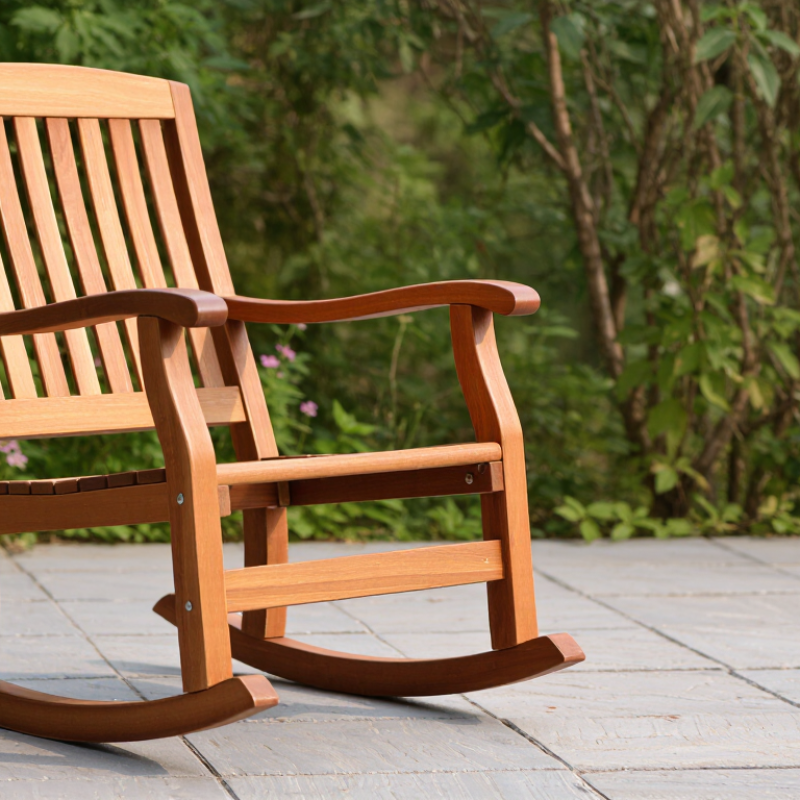
Teak is valued outdoors because its heartwood contains natural oils and extractives that help resist moisture and decay. Its performance is not identical throughout the tree: sapwood is less durable, so ask whether exposed parts are heartwood. The USDA Forest Products Laboratory’s Wood Handbook (2021) reports teak’s basic specific gravity at about 0.55 and total shrinkage at roughly 7.2%. Those figures suggest useful dimensional stability, but they do not guarantee a chair will withstand every climate or construction flaw.
For a garden rocker, stability matters as the curved runners and joints experience repeated movement. Check the grain and finish around the runner connections, arm supports, and seat slats. Hairline gaps, rough end grain, or trapped water can become trouble spots. Teak can weather to a silver-gray surface when left untreated; that color change is usually cosmetic, not proof of failure. Still, appearance and durability are not the same thing.
Not maintenance-free. Rain, strong sun, and standing water still matter. Place the chair where water can drain, and inspect fasteners and joints each season. A breathable cover can reduce prolonged wetting, though a damp chair should not be sealed beneath one. I would not judge teak by color alone; even attractive wood can hide weak joinery. Construction deserves the same scrutiny as the timber.
| Selection Factor | What to Check | Why It Matters | Practical Guidance |
|---|---|---|---|
| Teak suitability | Look for solid teak components and clear information about the wood’s origin and construction. | Teak is naturally durable and contains oils that help it withstand outdoor exposure better than many untreated woods. | Ask whether the frame is solid teak or a mix of teak and other materials; check any sustainability claims independently. |
| Outdoor weathering | Consider whether you are comfortable with the wood’s appearance changing outdoors. | Unfinished teak commonly weathers from its original warm brown tones to a silvery-gray patina. Weathering is mainly a surface color change. | To retain a warmer appearance, follow the maker’s care instructions for teak cleaner or oil. Test products on a small area first. |
| Frame and joints | Inspect joints, fasteners, arm connections, and the points where the rockers meet the chair frame. | A rocking chair experiences repeated movement, so sound joinery and secure assembly are important for stability and long-term use. | Check for wobble, cracks, loose hardware, or uneven rocker alignment. Follow the assembly and re-tightening instructions provided. |
| Rocking motion and stability | Test the chair on a level, firm surface and check that both rockers contact the ground evenly. | The rocker shape and chair balance affect how smoothly the chair moves and how secure it feels. | Choose a motion that feels controlled rather than abrupt, and use the chair only on a surface suitable for rocking. |
| Comfort and fit | Compare seat width and depth, back support, arm height, and the chair’s overall dimensions with the intended user. | A chair can be well made yet uncomfortable if its proportions do not suit the user or the available space. | If possible, sit in the chair before buying. Check the product’s dimensions and leave enough clearance for the rocker movement. |
| Care and maintenance | Review the recommended cleaning method and whether the finish needs periodic attention. | Dirt and mildew can accumulate in damp or shaded locations, and finishes may require care according to their type. | Clean with a soft brush and mild soapy water when needed, rinse, and let the chair dry. Avoid harsh pressure washing unless the manufacturer permits it. |
| Responsible sourcing | Look for verifiable chain-of-custody information or recognized forest-certification documentation where available. | Teak’s durability does not by itself confirm that the wood was responsibly sourced. | Ask for specific documentation rather than relying only on broad terms such as “eco-friendly” or “sustainable.” |
Teak heartwood contains natural oils that help resist moisture and decay. It can still suffer from poor construction or trapped water.
Not necessarily. Sunlight can turn untreated teak silver-gray, which is usually a cosmetic change rather than damage.
Check the runner joints, arm supports, and seat slats for gaps or rough edges. Look for trapped water and loose connections.
Sit with both feet flat on the ground. The seat edge should not press behind your knees, and your back should meet the backrest comfortably. Fit is personal.
Not always. A cushion can raise the seat and change back support, so test the chair without one too.
Leave teak unfinished if you prefer its natural weathered look. A clear sealer can slow color change, while oil can deepen the warm tone. Both need periodic attention.
Let water drain away from the runners and inspect the joints for dampness. Wash dirt with mild soap and a soft brush. Avoid harsh scrubbing.
No. Inspect fasteners and joints each season, and keep cushions dry during long wet spells. A damp chair should not be sealed under a cover. I would not judge durability by color alone.
Choosing Teak Garden Rocking Chairs begins with understanding why teak suits outdoor furniture. Its natural strength and resistance to moisture make it a durable choice, while its warm appearance can complement a range of garden styles. Look closely at the frame joints, overall balance, and rocking mechanism to ensure smooth, steady movement and sturdy support.
Comfort and fit matter just as much as construction. Consider the chair’s dimensions, seat shape, back support, and armrests in relation to the people who will use it and the available space. Compare natural or treated finishes, and think about how much weather protection and routine care you are willing to provide. Finally, assess safety, long-term durability, and price together: a well-made chair that feels stable and comfortable can offer better value over time than one chosen on appearance alone.