Jepara, Central Java — Furniture Manufacturer Since 2011
Prima Furniture - Indonesian teak furniture manufacturer logo CV. Prima Putra · Indonesia
0%

A coffee table looks simple until it sits under a lamp, beside a sofa, and within reach of everyday spills. Solid Teak Coffee Tables attract buyers with warm grain and a reputation for durability. Yet the label “solid teak” alone cannot confirm quality. Board thickness, stable joinery, careful drying, and a suitable finish all matter. Small details show up quickly.

The market is large, and choices can feel overwhelming. Grand View Research valued the global furniture market at about $736.7 billion in 2023. That figure describes the wider industry, not teak tables specifically. For practical guidance, the USDA Forest Products Laboratory’s Wood Handbook explains how moisture changes can affect wood dimensions. A table that was poorly dried may develop movement or gaps after entering a drier home. That matters.

This guide explains how to assess teak grade, construction, finish, dimensions, and sourcing before buying. Look closely at the grain and the underside, not just the showroom surface. Ask whether the top and frame are genuinely solid teak, and how the wood was dried. Responsible sourcing also deserves a clear answer; the FAO’s Global Forest Resources Assessment 2020 provides broad context on forests and their management, but it does not certify an individual table. No checklist removes every uncertainty. Still, informed questions can help you choose a table suited to your room, routine, and expectations.
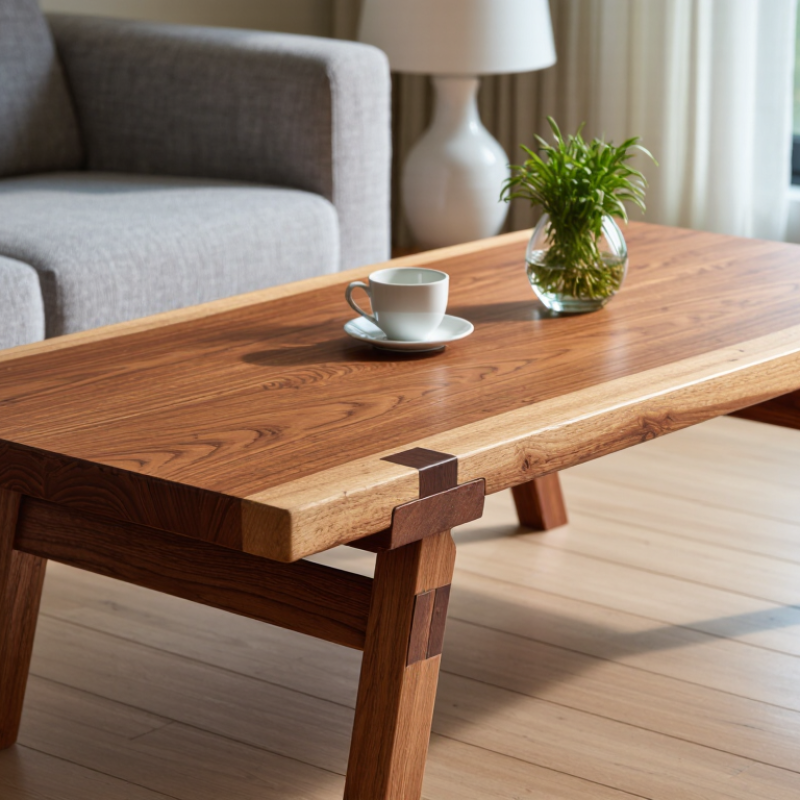
How to Choose Solid Teak Coffee Tables?

How to Identify Genuine Solid Teak

A solid teak coffee table should show continuous wood grain, not merely a convincing golden-brown surface. Color changes with age, sunlight, and oil, and other woods can be stained to look similar. Inspect the underside, apron edges, screw holes, and end grain. Solid boards usually carry their grain across adjoining surfaces; veneer may show a thin layer over a different core. Not by color alone.

Check hidden areas, such as beneath the tabletop or inside a removable drawer, where the wood may be unfinished. Teak’s oily feel and distinctive scent can support identification, but coatings often mask both. The USDA Forest Products Laboratory’s Wood Handbook: Wood as an Engineering Material (2010) lists teak at about 0.55 specific gravity at 12% moisture content. That figure offers useful context, not a quick authenticity test: size and moisture affect a table’s weight. Ask for the botanical name, Tectona grandis, construction details, and sourcing records. Compare grain at joints, too. A visual inspection can still miss a carefully made veneer, so treat any single clue with caution.

How to Choose Solid Teak Coffee Tables? - How to Identify Genuine Solid Teak

What to Check Signs of Solid Teak How to Inspect Important Limitations
Grain and color Teak commonly has a golden-brown to medium-brown color and a visible, sometimes irregular grain. Compare the grain across the tabletop, edges, legs, and underside. Look for natural variation rather than an identical printed pattern. Color varies with age, finish, and exposure to light. Staining can make other woods look similar.
End grain and edges Exposed ends may show wood fibers and growth-ring patterns rather than a thin decorative layer over a different core. Check the underside, leg ends, and any unfinished or discreet edge. Look for consistent wood appearance through the piece. Solid furniture can include glued boards, plugs, or concealed hardware. An edge alone does not prove the whole table is solid teak.
Tabletop construction A solid-wood top is typically made from joined teak boards, with board seams or changing grain direction visible on the underside. Inspect the underside and perimeter for veneer edges, a different-colored core, or a surface layer that appears separate from the substrate. Board seams are normal in solid-wood construction. Some high-quality tables combine solid parts with veneered panels, so ask which components are solid.
Weight and feel Teak is a relatively dense hardwood, so a table may feel substantial for its size. If possible, lift one edge gently and compare the weight with tables of similar dimensions and construction. Weight is only a clue. Table size, thickness, hardware, and other dense woods can affect how heavy a piece feels.
Joinery and stability Well-made solid-wood furniture often has secure, even joints and legs that sit firmly without wobbling. Check joints, fasteners, and leg alignment. Apply gentle pressure to the corners to test for movement. Joinery quality indicates workmanship, not wood species. Screws or other hardware do not by themselves mean a table is not solid teak.
Surface finish The finish may be clear, oiled, or otherwise treated while leaving the wood grain visible. Ask what finish was applied and whether it can be maintained or refinished. Inspect for a consistent surface and exposed wood underneath. Finish type and sheen do not establish species or solid-wood construction. Avoid relying on water-beading tests, which can be affected by coatings.
Product description and documents A clear specification identifies the wood species and states which parts are solid teak, rather than using vague terms such as “teak finish.” Request written details for the top, frame, legs, and any panels, along with care instructions and applicable sourcing documentation. A label or claim is not physical proof. Read the full description and confirm that “solid teak” applies to the components you expect.
Overall condition A sound table should have secure joints and no major cracks, loose boards, or signs of active moisture damage. Inspect all sides, including the underside and corners. Ask about repairs, prior outdoor use, and any uneven or sticky finish. Small color differences and minor wear can occur in natural wood. Condition does not confirm that the wood is teak.

Buying tip: Use several checks together and ask for a written, component-by-component description. No single visual or weight test can reliably confirm that a coffee table is made entirely of solid teak.

How to Choose the Right Size and Shape

How to Choose Solid Teak Coffee Tables?
How to Choose the Right Size and Shape

Start with the seating area, not the table display. A coffee table around one-half to two-thirds of your sofa’s length usually feels balanced. Measure the sofa, then leave about 14 to 18 inches between the table and nearby seats for comfortable reach and movement. Keep the tabletop close to sofa-seat height, or slightly lower. Check the full footprint, including the legs. Solid teak tables can be heavy, so moving one through a narrow doorway may be harder than expected.

Tips: Rectangular tables suit long sofas. Round or oval shapes soften tight walkways and reduce sharp corners. For a sectional, a square table can work well if people can still pass around it.

Use painter’s tape to mark the table’s proposed outline on the floor. Walk around it, open drawers, and check where your feet land. The right shape depends on how you use the room, not just its measurements. A round table may improve traffic flow, but offer less flat surface for serving. A broad rectangular top holds more, yet can dominate a small room. It is easy to misjudge from a showroom glance. Measure twice, and leave enough breathing room.

How to Choose the Right Size and Shape for a Solid Teak Coffee Table

A useful starting point is a coffee table about two-thirds the length of the sofa. For comfort, choose a table height close to the sofa seat height, and leave about 14–18 inches between the table and seating. Rectangular or oval tables often suit longer sofas, while round or square tables can work well in more compact seating areas.

How to Assess Construction and Stability

How to Choose Solid Teak Coffee Tables?

How to Assess Construction and Stability

A solid teak coffee table can look substantial, but appearance alone reveals little about its construction. Turn it over and inspect how the legs connect to the apron or frame. Check the joints. Tight, even connections should show no gaps, loose fasteners, or cracks around screw holes. If the table uses screws, they should sit firmly without splitting the wood.

Place the table on a hard, level floor and press gently on opposite corners. A stable table should not rock or twist under light pressure. Check that each leg touches the floor, and look for uneven cuts or bent fittings. Then press down gently near the center. The surface should feel firm, not springy. Avoid leaning your full body weight on it; that can damage the furniture and is not a useful test.

Teak is dense, but density cannot compensate for poor assembly. Ask whether the frame is solid teak throughout or combines teak with another material. Request clear construction details. Inspect underneath for cracks, repaired holes, or loose hardware. Variations in grain are normal, while a uniform finish does not prove strength. I would also recheck the table after delivery, since flooring or assembly conditions can affect stability. It is easy to overlook.

How to Compare Teak Finishes and Color

When comparing solid teak coffee tables, judge the finish in daylight, not only under warm showroom bulbs. Teak ranges from golden brown to deeper brown, and its grain can show darker streaks. A clear oil usually leaves the wood looking warm and natural. A tinted stain can deepen or even out the color, but may hide some grain. Ask for a finish sample on teak, not a different wood.

The USDA Forest Products Laboratory’s Wood Handbook (FPL-GTR-282) lists teak’s basic specific gravity at about 0.55. That figure describes density, not color, so it cannot tell you how a particular table will look. The handbook also explains that light exposure changes wood surfaces over time. Keep this in mind when comparing a new sample with a sunlit display table. The shades may not match.

Check the finish across the tabletop and beneath its edge. Look for cloudy patches, uneven sheen, or color pooled around the grain. A matte surface often softens glare; a glossy one makes small scratches easier to notice. Ask whether the finish needs periodic care, and request written instructions. I would not treat a tiny sample as a promise. Room light, window exposure, and the wood itself all matter. One detail is easy to miss: the finish can mellow as the table ages.

How to Match a Table to Your Room and Care Needs

A solid teak coffee table should fit the way your room is used, not only its color palette. Measure the sofa height and leave roughly 14 to 18 inches between the seat and table edge for comfortable reach. In a narrow room, choose an oval or rounded design; softened corners can make the walking path feel less crowded. Check doorways too. A beautiful table can still be awkward. Measurements also cannot predict every tight corner.

Tips: Put painter’s tape on the floor to mark the table’s footprint before buying. Compare the outline with drawers, rugs, and the route to the balcony. If you often set down drinks, choose a stable top with enough surface space. Avoid oversized pieces that dominate a small seating area. Small test, useful answer.

Teak’s natural oils help it handle everyday use, but care depends on the finish and your preferred look. Wipe spills promptly with a soft, slightly damp cloth, then dry the surface; do not let water sit around seams. To keep a warm brown tone, limit strong direct sunlight, which can fade the color unevenly. Teak may gradually turn silvery gray with exposure. That change is normal, though not everyone likes it. Follow the finish-care guidance and test any cleaner underneath first.

FAQS

How long should a solid teak coffee table be?

Choose one about half to two-thirds of your sofa’s length. Measure the sofa first.

How much space should remain around the table?

Leave about 14 to 18 inches between the table and nearby seats. That gives you room to reach and walk.

Which shape works best for different rooms?

Rectangular tables suit long sofas. Round or oval tables can ease tight walkways. A square table may fit a sectional.

How can I check whether a table fits?

Mark its outline on the floor with painter’s tape. Walk around it and open nearby drawers. Measure twice.

What tabletop height should I look for?

Keep it close to your sofa-seat height, or slightly lower. Also check the legs when measuring its full footprint.

How do teak finishes affect color?

Clear oil usually keeps the wood looking warm and natural. Tinted stain may deepen the color but hide some grain.

How should I compare teak color samples?

View them in daylight, and ask for a sample on teak. Room light and window exposure can change how the color appears. Showroom lighting can mislead.

What should I know about teak’s density?

A wood handbook lists teak’s basic specific gravity at about 0.55. That describes density, not a table’s color or appearance.

How can I spot an uneven finish?

Check the tabletop and its underside for cloudy patches, uneven sheen, or color pooled near the grain. Small detail, big difference.

Will a teak finish change over time?

Light exposure can change wood surfaces, and the finish may mellow with age. Ask for written care instructions. A small sample is not a promise.

Conclusion

Choosing Solid Teak Coffee Tables starts with learning how to recognize genuine teak through its natural grain, warm color, and distinctive character. Consider the table’s size and shape in relation to your seating area, walking space, and everyday use so it feels practical without overwhelming the room.

Look closely at construction, including secure joints, even legs, and a stable base. Teak finishes can range from natural and lightly oiled to deeper-toned treatments, so choose a color and surface that suit your preferences and care routine. Finally, match the table’s style and proportions to your room, and consider how much cleaning or maintenance you are willing to do. These factors can help you select a durable, attractive table that works well in your home.


Ethan

Ethan

Ethan is a professional marketing specialist with a strong understanding of the company’s products, market position, and customer needs. With a background in strategic communication, content development, and industry research, he is committed to presenting complex product information in a clear,......
Talk